What Is EPDM Roofing?

EPDM is a synthetic rubber roofing membrane, usually black, installed in large sheets and sealed with primer and seam tape. It stays flexible in cold weather and suits large, simple low-slope roofs and ballasted assemblies. When an existing EPDM roof is aging but still sound, a coating restoration can be an alternative to tearing it off.

Decades-proven protection in a single-ply membrane

Strong Contractors installs, replaces, repairs and restores EPDM roofing systems for commercial, industrial and institutional facilities. EPDM is a flexible synthetic rubber membrane designed for low-slope roofing applications and known for its resistance to weathering and temperature extremes. It is commonly selected for long service life, large sheet sizes and dependable performance across a wide range of climates.

Common Applications:
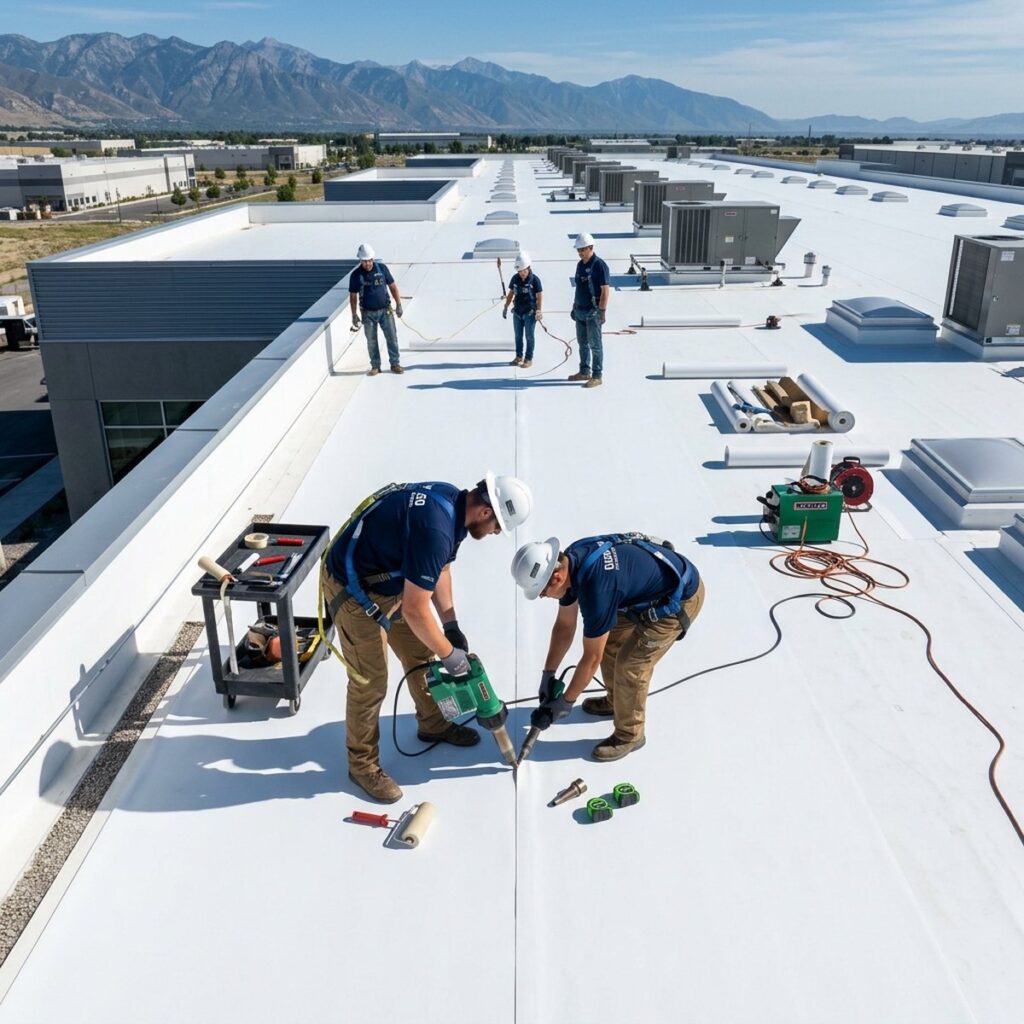
  • Warehouses and Distribution Facilities
  • Office and Commercial Buildings
  • Schools and Institutional Facilities
  • Healthcare Buildings
  • Industrial Facilities
  • Large, Open Low-Slope Roof Areas
  • Building Additions and Expansions
  • Ballasted, Mechanically Attached and Fully Adhered Assemblies
Strong Contractors' Approach to EPDM Roofing

Performance Begins With Compatibility and Preparation

EPDM relies on clean substrates, compatible materials and disciplined execution at seams, perimeters and flashings. Strong coordinates the membrane, attachment system, adhesives, primers, seam tapes and accessories so each interface functions as part of one continuous assembly.

  • Understand the Building
    We evaluate the substrate, roof configuration, drainage, existing conditions and appropriate attachment approach.
  • Coordinate Compatible Materials
    Membrane, adhesives, primers, tapes and flashing products are coordinated to avoid incompatible interfaces.
  • Control Adhesion and Seaming
    Adhesive application, membrane relaxation, priming, seam-tape placement and rolling are controlled throughout installation.
  • Reinforce High-Stress Conditions
    Perimeters, corners, curbs, drains and penetrations receive focused securement and detailing.
Fit Check

When does EPDM make sense?

Usually a Good Fit

  • Large, open roof areas with few penetrations
  • Cold climates where membrane flexibility matters
  • Ballasted systems where the structure can carry stone or pavers
  • Repairs, additions or tie-ins to an existing EPDM roof
  • Buildings where cooling cost is not the main driver

Usually Not a Fit

  • Kitchen exhaust or oils reach the roof surface
  • You want a white, reflective roof to cut cooling load
  • The existing EPDM is sound enough to restore with a coating for less
Our Process

How an EPDM Project Moves

Most EPDM work starts with a decision about the roof already there: repair it, restore it, recover it or replace it.

  1. Choose: Repair, Restore, Recover or Replace

    We look at lap condition, shrinkage at the edges, wet insulation and any ballast before recommending a scope. A sound membrane may only need repairs or a coating, and a dry assembly may qualify for a recover.
  2. Deal With the Ballast

    On ballasted roofs, stone or pavers are removed and either stockpiled for reuse or hauled away, depending on the new assembly and what the structure can carry.
  3. Plan the Weather Window

    Adhesives and primers have temperature and moisture limits, so installation is scheduled around the forecast and stored materials are kept protected until use.
  4. Lay Out the Sheets

    Sheet layout is planned to reduce field seams, keep laps out of drainage paths and suit the attachment method chosen for the roof.
  5. Inspect Before Closeout

    Laps and flashings are checked by hand along their full length, corrections are made and the manufacturer inspects the roof for warranty.
  6. Set the Care Schedule

    We leave an inspection plan focused on laps, perimeter flashings and drains, the places EPDM roofs usually show wear first.
System Specs

Typical EPDM System Specs

SpecTypical Value
MembraneEPDM (ethylene propylene diene monomer) synthetic rubber, single ply
SurfaceTypical: black; white versions are available
SeamsPrimed laps with seam tape, rolled
AttachmentBallasted, mechanically attached or fully adhered
Sheet sizeLarge sheets that reduce the number of field seams
ThicknessTypical: 45 or 60 mil; 90 mil available
Manufacturer partnersElevate, GenFlex, RPI and GAF
WarrantyNo Dollar Limit (NDL) manufacturer warranties, typically 10 to 20 years depending on the system
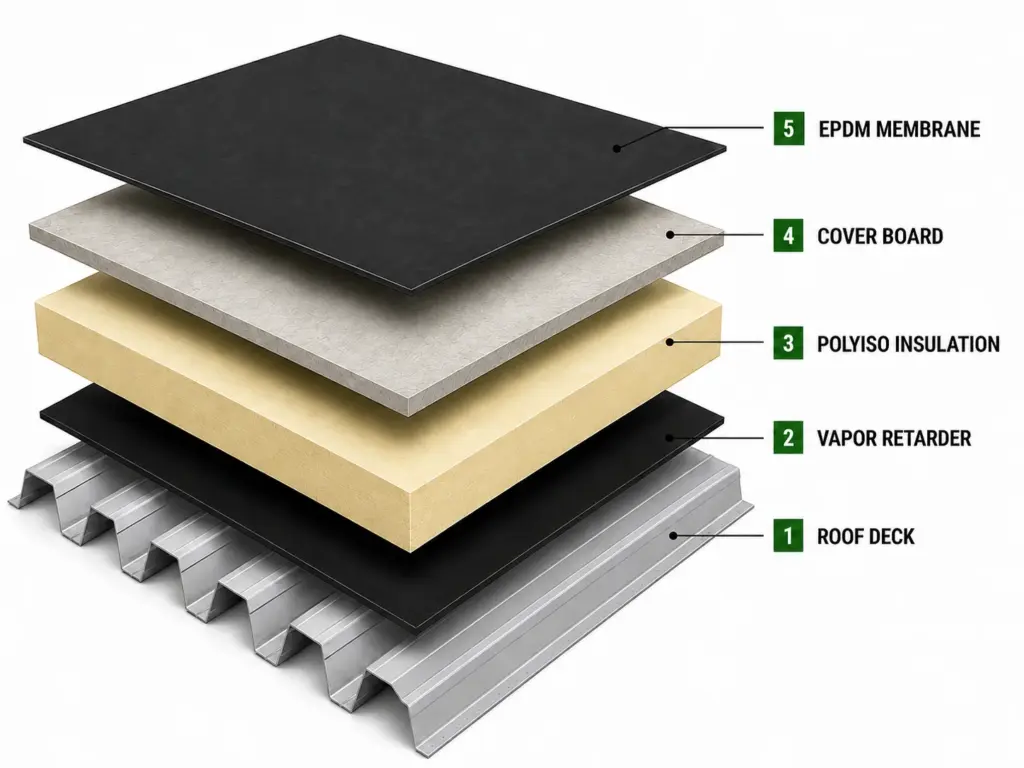
EPDM roof assembly layers: roof deck, vapor retarder, polyiso insulation, cover board, EPDM membrane
Pricing

What Drives the Cost

EPDM projects range from patching laps to a full tear-off. These factors set where yours lands.

  • Ballast

    Removing, reusing or disposing of stone and pavers is often a major line item on a ballasted EPDM roof.

  • Restore or Replace

    Coating a sound membrane avoids tear-off and disposal. Replacement costs more but resets the insulation and lets the deck be inspected.

  • Attachment Method

    Fully adhered systems use more adhesive and labor. Ballasted and mechanically attached systems trade that for weight or fastener requirements.

  • Edge and Flashing Condition

    Shrinkage at perimeters and curbs, and the number of penetrations, drive the amount of detail labor.

  • Season and Temperature

    Cold-weather limits on adhesives and primers can affect schedule, staging and crew time.

Compare Options

EPDM vs. TPO vs. Silicone Restoration

EPDM RoofingTPO Roofing SystemsSilicone Roof Coatings
SurfaceBlack rubberWhite thermoplasticWhite seamless coating
SeamsTaped lapsHeat-welded lapsCoats over existing laps
Tear-off neededDepends on existing roofDepends on existing roofNo, on an eligible roof
Heat gainHigherLowerLower
BallastCan stay ballastedUsually fastened or adheredCan be reused over a protection mat
Typical fitLarge, simple, cold-climate roofsReflective replacement or recoverSound roof that needs more years
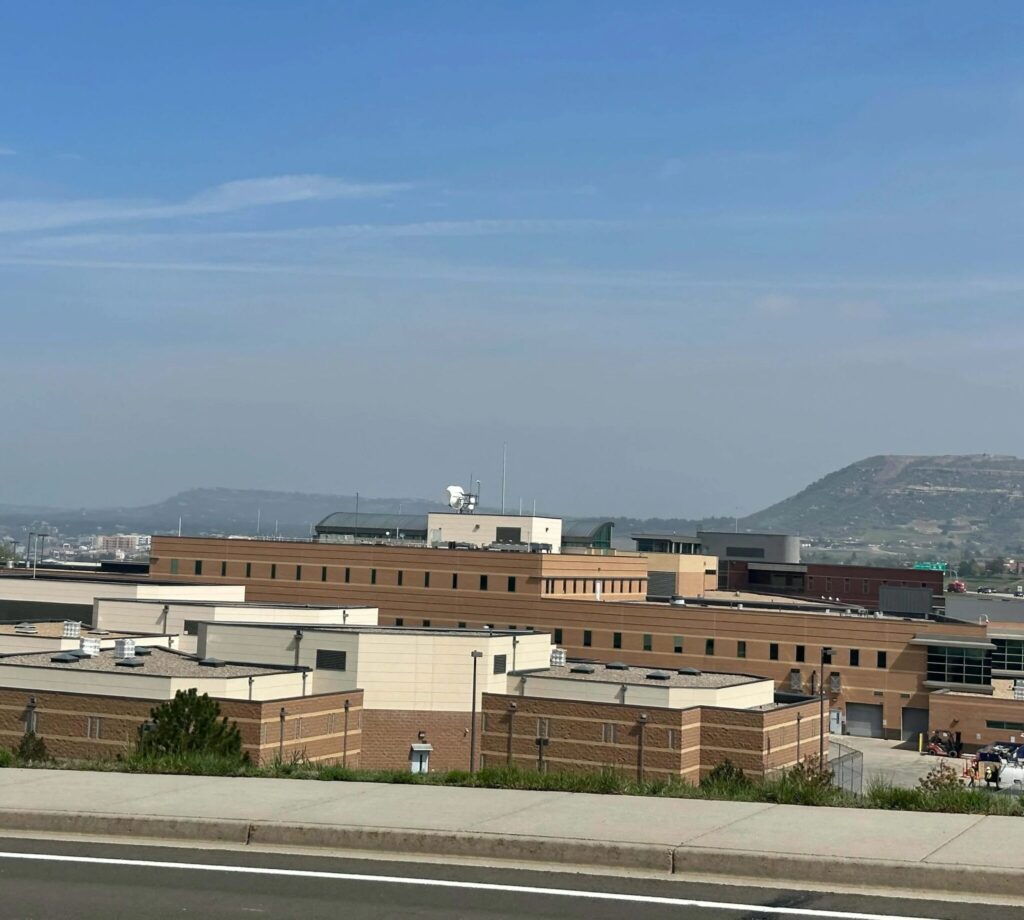
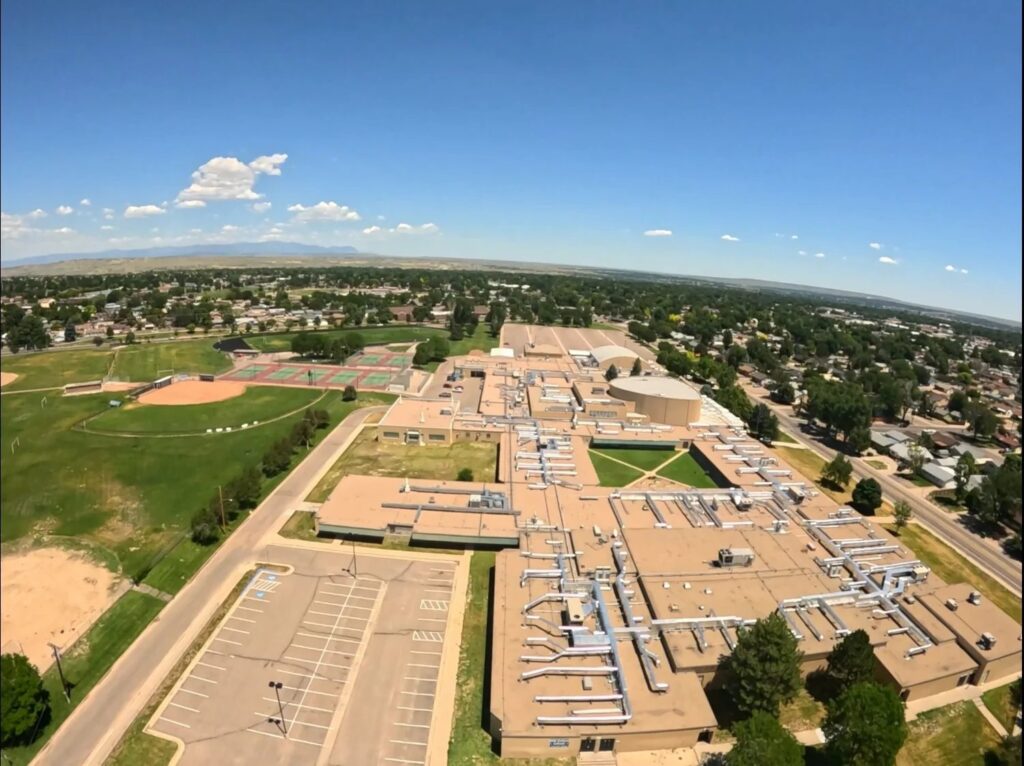
Douglas County Justice Center campus buildings
Featured Project

Douglas County Justice Center

Re-roofing of a courthouse and county jail: a liquid coating over the existing ballasted EPDM membrane, a protective mat, and the original river rock ballast reused.
View Case Study
FAQ

EPDM Roofing Questions

Can an old EPDM roof be coated instead of replaced?

Often, if the membrane is still attached, the insulation is dry and the laps can be prepared. At the Douglas County Justice Center, Strong applied a liquid coating directly over the existing ballasted EPDM, added a protective mat for puncture resistance and reused the existing ballast instead of tearing the roof off.

Can a rubber roof be repaired?

Yes. Punctures, open laps and failed flashings on an EPDM roof can usually be repaired with compatible primers, tapes and patches. A repair only holds if the surrounding membrane is cleaned and primed correctly. Widespread lap failure or wet insulation usually means the roof needs a larger scope than spot repairs.

Is EPDM or TPO better for a commercial roof?

Neither wins everywhere. EPDM stays flexible in cold weather and works well on large, simple roofs and ballasted systems. TPO is white and reflective with welded seams, which helps where cooling cost matters. When a U.S. Space Force facility considered switching to black EPDM, Strong advised against it because of the added heat gain.

Why is my EPDM roof pulling away at the edges?

Aging EPDM can shrink, which pulls on perimeter flashings, corners and curbs. That tension can open laps or lift the membrane away from walls, and it is a common reason older EPDM roofs leak at the edges first. The fix depends on how far it has gone: reflashing, added securement or a larger scope.

What is a ballasted EPDM roof?

The membrane is laid loose over the insulation and held down by river rock or concrete pavers instead of fasteners or adhesive. It installs quickly on large roofs, but the stone hides the membrane and has to be moved for repairs, inspections or replacement. Strong also offers ballast removal as a standalone service.

Can spray foam be installed over EPDM?

On many roofs, yes. Spray foam can go over existing EPDM with a cover board, adding insulation and a seamless surface without a full tear-off. The existing roof has to be checked for trapped moisture first, because wet insulation should never be sealed under a new system.

Related Services

Explore More Commercial & Industrial Roofing Solutions

TPO Roofing Systems

Read More

PVC Roofing Systems

Read More

Metal Roofing & Retrofits

Read More

Built-Up Roofing (BUR)

Read More

Modified Bitumen Roofing

Read More