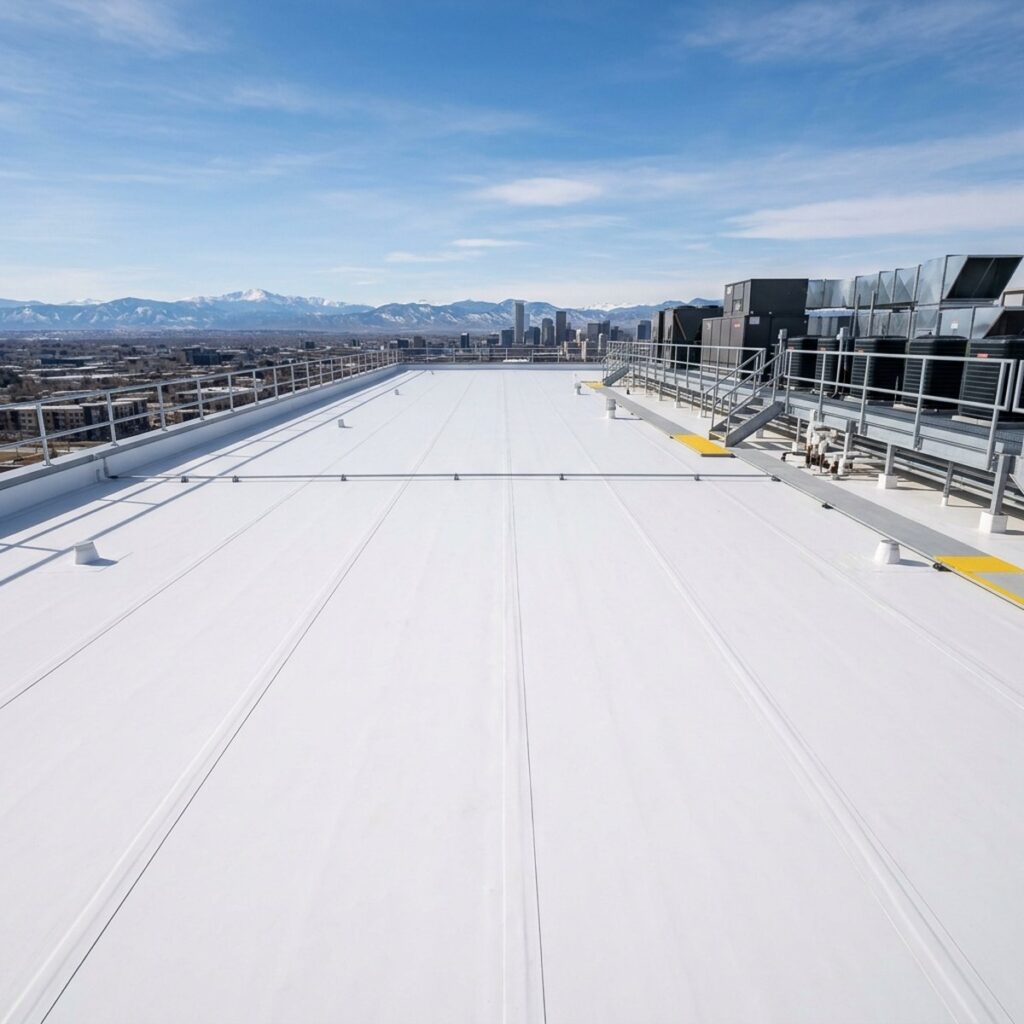
Spray Foam (SPF) Roofing

What Is Spray Foam (SPF) Roofing?

Spray foam (SPF) roofing is closed-cell polyurethane foam sprayed over an existing roof and sealed with an elastomeric topcoat. It suits low-slope commercial and industrial roofs that need more insulation, better drainage or a seamless surface over complex details. The roof underneath has to be dry enough to stay in place, and a badly saturated roof usually needs a tear-off first.

Seamless insulation and roofing in a single system

Spray polyurethane foam (SPF) is sprayed directly onto the existing roof deck, expanding into a seamless, fully-adhered membrane that insulates and waterproofs in one step. Because it’s seamless, there are no laps or seams for water to find.

Strong Contractors is an SPFA-accredited installer, applying SPF systems finished with a protective siliconee or acrylic coating to guard against UV degradation and foot traffic.
  • Warehouse & Distribution Facilities
  • Manufacturing & Industrial Plants
  • Re-Roof Over Irregular or Complex Roof Geometry
  • Roofs Needing Added Insulation Value
  • Cold Storage Facilities
  • Agricultural & Storage Buildings
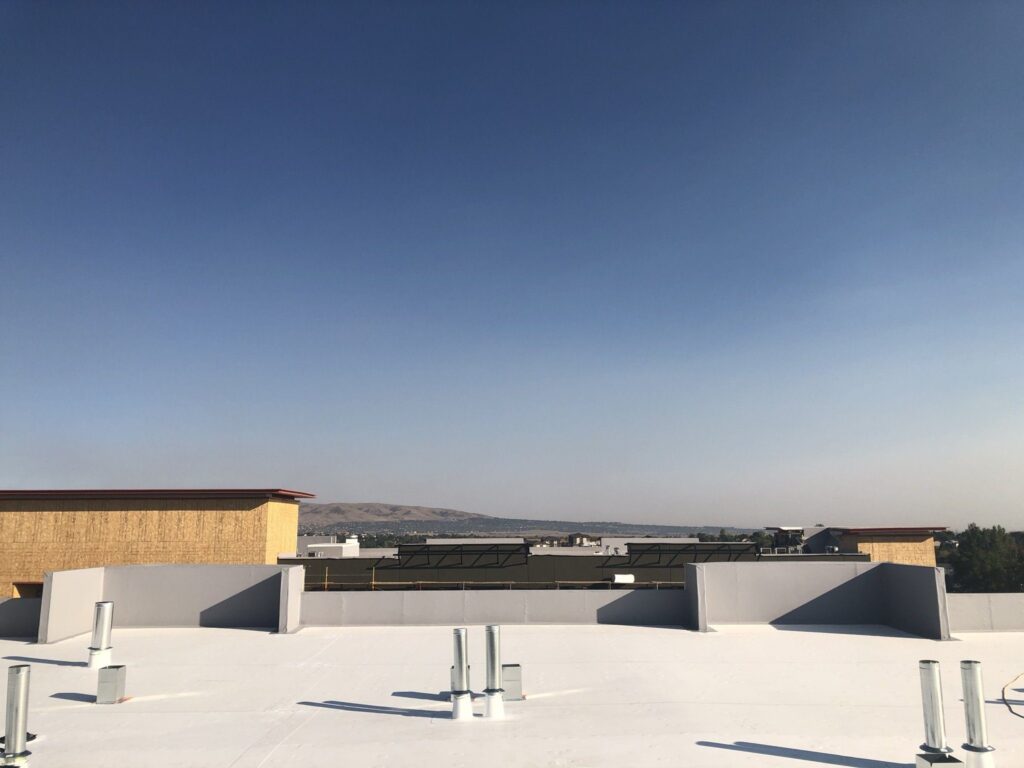
Finished bright white coated commercial roof with vent stacks and parapet walls under a clear sky, hills in the distance
Strong Contractors' Approach to Spray Foam (SPF) Roofing

Accredited Crews. Verified Thickness.

SPF is unforgiving of bad technique — inconsistent spray thickness or the wrong weather window can compromise the whole system. Our crews monitor deck temperature, humidity, and wind before every application, and we verify foam thickness with core samples across the roof.

That process is what makes SPF systems some of the longest-lasting, best-insulating roofs we install.

  • SPFA-Accredited Crews
    Our installation program is accredited by the Spray Polyurethane Foam Alliance.
  • Full-System Warranties
    Manufacturer-backed warranties covering foam and coating, with terms up to 20 years.
  • Quality Documentation
    Foam thickness is core-sampled and photographed across the roof before coating.
  • Local Expertise
    We schedule SPF application around Colorado's weather windows to protect cure quality.
Fit Check

Is spray foam right for your roof?

Usually a Good Fit

  • An infrared survey shows the existing roof is dry enough to stay in place
  • The building needs more insulation value, not only a new waterproofing layer
  • Water ponds because the roof is too flat, and the foam can build in slope
  • The roof is crowded with penetrations, curbs or odd shapes that seams handle poorly
  • A tear-off would disrupt operations or send a large volume of material to landfill
  • An asbestos-containing roof in good condition can be encapsulated in place, where regulations allow
    Certified Asbestos Building Inspector
    Certified Asbestos Contractor/Supervisor

    With both certifications, Strong can check the roof for asbestos and handle the encapsulation itself.

Usually Not a Fit

  • Testing shows widespread wet insulation that has to come out
  • The roof deck or structure is damaged and needs repair first
  • The owner does not plan to recoat the roof every 10 to 15 years
  • The project specification already calls for a specific membrane system
Our Process

From Infrared Survey to Recoat Cycle

Unlike a factory-made sheet, spray foam is made on the roof as it goes down. A typical project follows these seven steps, from survey to recoat plan.

  1. Survey the Existing Roof

    We walk the roof and map drains, penetrations and equipment. On most substrates we also recommend an infrared survey to find saturated insulation, and wet areas are marked for removal before any foam is planned.
  2. Remove What Cannot Stay

    Wet insulation and failed material are cut out and replaced. On tar-and-gravel roofs, the loose gravel comes off first. EPDM, PVC and TPO membranes receive a cover board before foam.
  3. Clean and Prime

    The surface is pressure washed to remove dirt, dust and debris so the foam bonds across the whole roof. If the substrate needs it, a primer goes on before spraying.
  4. Spray the Foam and Build Slope

    Closed-cell foam is applied at a minimum of 1 inch, and thicker where the insulation target requires it. Around drains and low spots, extra foam builds slope so water moves off the roof.
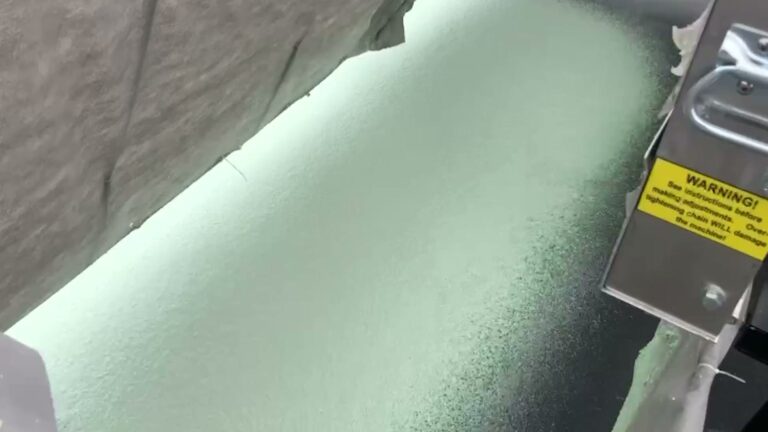
    Fresh spray polyurethane foam being applied across a roof surface beside the spray rig
  5. Seal It With an Elastomeric Topcoat

    The topcoat goes on in multiple passes to protect the foam from UV. Silicone or urethane is used on flat areas that may hold water, and acrylic on steeper slopes.
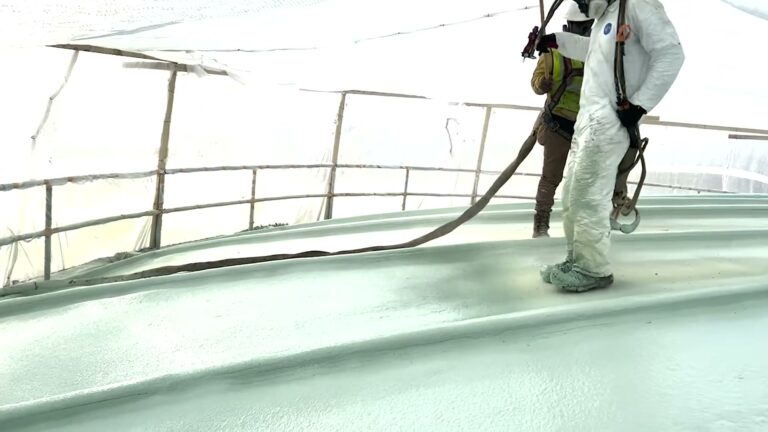
    Strong Contractors crew member in a white protective suit spraying coating on a curved roof inside a tented enclosure
  6. Broadcast Granules Where They Earn Their Keep

    Granules set into the final coat add hail, puncture and slip resistance and help the white surface stay reflective. They are worth specifying wherever crews walk the roof to reach equipment.
  7. Plan the Recoat Cycle

    Periodic inspections, debris clearing and prompt sealing of small damage keep the foam protected. Every 10 to 15 years, the roof is cleaned, repaired, primed if needed and recoated with the same coating type.
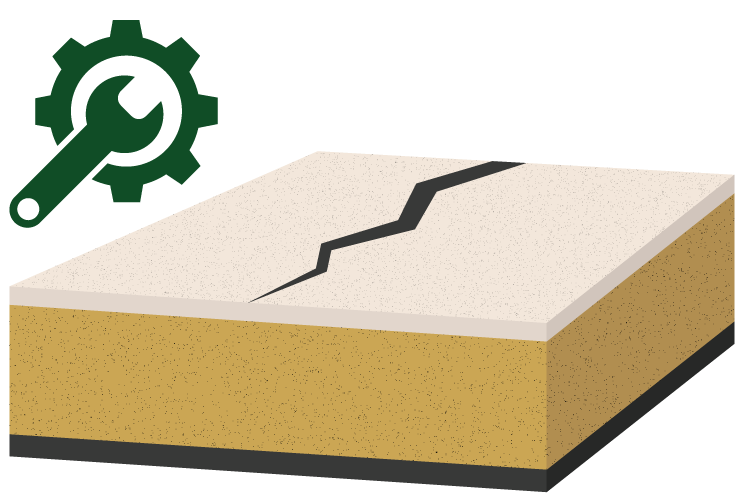
    Illustration of a spray foam roof with a crack in the top coating and a wrench and gear icon, representing inspection and repair
Learn From the Industry

Spray Foam Roofing, Explained by the SPFA

The Spray Polyurethane Foam Alliance is the trade association that accredits SPF roofing contractors, Strong among them. We share its roofing video so you can hear about spray foam straight from the industry body.

Video courtesy of the Spray Polyurethane Foam Alliance (SPFA)

SPFA Roofing Video
System Specs

Typical SPF System Specs

SpecTypical Value
Foam typeClosed-cell spray polyurethane foam
Minimum foam thicknessTypical: 1 in.; thicker for insulation or slope
Insulation example3.5 in. of foam to meet R-21 (Centennial Water tank lids)
TopcoatElastomeric silicone, urethane or acrylic in multiple passes
Surface optionBroadcast roofing granules
Compatible substratesBUR, modified bitumen, metal, concrete; EPDM, PVC, TPO with cover board
Recoat intervalTypical: every 10 to 15 years
WarrantyNo Dollar Limit (NDL) manufacturer warranties, typically 10 to 20 years depending on the system
Pricing

What Drives the Cost

Spray foam is priced on the roof in front of us, not from a per-square-foot list. These are the factors that move an SPF bid the most.

  • Condition of the Existing Roof

    The infrared survey decides how much wet insulation and failed material must be removed and replaced before spraying. A dry roof keeps that line small.

  • Foam Thickness and Insulation Target

    Every added inch of foam adds material and spray time. A roof that must reach a set R-value needs that thickness across the whole area, plus extra where slope is built in.

  • Topcoat and Granules

    Coating chemistry, the number of passes and granules all change material cost and the warranty options.

  • Roof Geometry and Details

    Penetrations, curbs, parapets and rooftop units need hand detailing, which adds labor beyond the open field.

  • Site Access and Schedule

    Secure sites, occupied buildings, overspray control near vehicles and neighbors, and winter work that needs a heated enclosure all add planning and labor.

Compare Options

SPF vs. Silicone Restoration vs. TPO Replacement

Spray Foam (SPF) RoofingSilicone Roof CoatingsTPO Roofing Systems
Existing roofUsually stays in place if dryStays in place if soundTorn off, or recovered where eligible
Adds insulationYes, set by foam thicknessNoYes, with new insulation boards
SeamsNoneNoneHeat-welded seams
Ponding waterFoam can be sloped to drainTolerates ponding; adds no slopeTapered insulation can add slope
Long-term upkeepRecoat every 10 to 15 yearsInspect and recoat with siliconeSeam and flashing repairs
Strongest fitNeeds insulation or has complex geometryWeathered but dry membraneWet or failed roof assembly
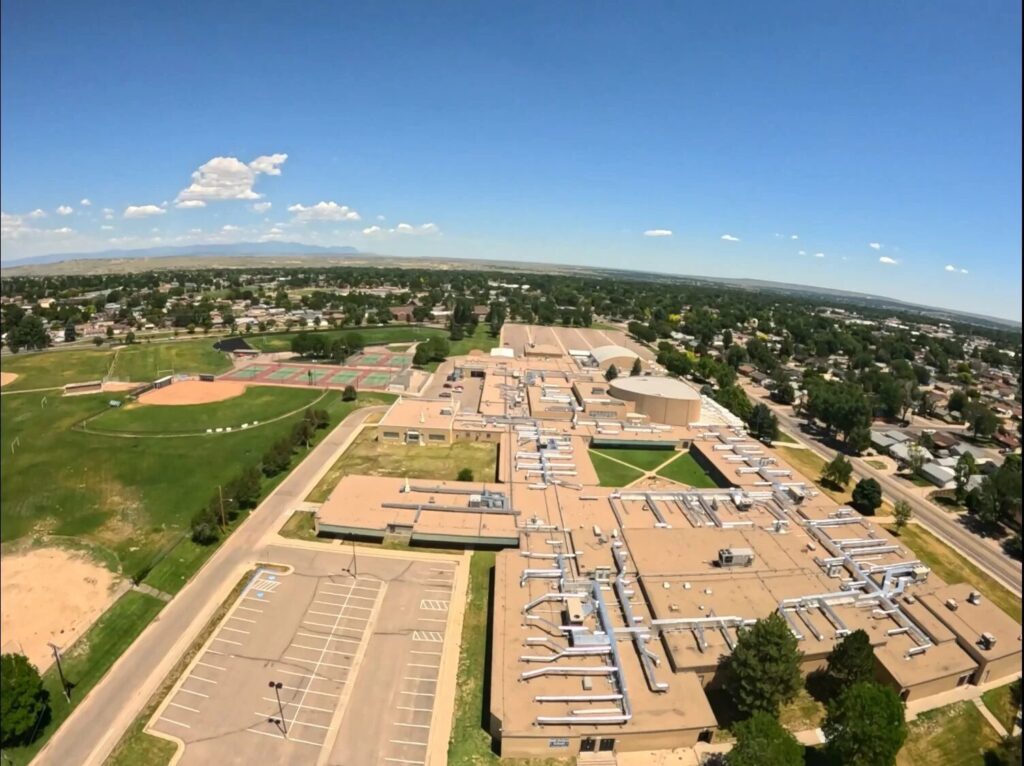
Aerial view of a Pueblo School District 60 school with its spray foam roof
Featured Project

Pueblo School District 60

Five roofing projects for Pueblo School District 60, covering over 530,000 square feet of spray foam and silicone coating, delivered in under four months.
Pueblo, CO
530,000+ SF
2024
View Case Study
Credentials and Awards

Accredited, Certified and Recognized

Here are the accreditations, licenses and certifications Strong holds, plus the awards and rankings it has earned.

  • SPFA Accredited Contractor

    Strong is the only SPFA Accredited Roofing Contractor in Colorado and one of only 15 in the country.

  • Monika and Matteo of Strong Contractors holding SPFA award trophies on stage with an Elastochem representative
    Matteo and Monika of Strong Contractors with their trophies at the 2025 SPFA Industry Excellence Awards.

    2025

    SPFA Industry Excellence Awards

    Strong's spray foam roof at South Park Elementary School in Pueblo earned a category win and a runner-up finish.

  • Gaco Licensed Applicator

    Strong is licensed to apply Gaco roofing systems.

  • 2023, 2024

    Gaco Top Contractor

    Gaco named Strong a Top Contractor two years in a row.

  • Inc. 5000 2024 badge: No. 2769 among America's fastest-growing private companies
    Inc. 5000 2024 badge: No. 165 in Construction among America's fastest-growing private companies
    Inc. 5000 2024 badge: No. 74 in Colorado among America's fastest-growing private companies
    Inc. 5000 2024 badge: No. 60 in the Denver, CO metro among America's fastest-growing private companies

    2024

    Inc. 5000: America’s Fastest-Growing Private Companies

    Strong ranked No. 2,769 on the Inc. 5000, No. 165 in Construction, No. 74 in Colorado and No. 60 in the Denver metro.

  • Certified Asbestos Building Inspector badge

    Certified Asbestos Building Inspector

    Strong is certified to inspect buildings for asbestos-containing materials.

  • Certified Asbestos Contractor/Supervisor badge

    Certified Asbestos Contractor/Supervisor

    Strong is certified to carry out and supervise asbestos work.

Outside Colorado?

We Bring Our Crews to the Job

Strong Contractors takes on spray foam, coating, and ballast removal projects outside Colorado, bringing our own crews, equipment, and project management to the job. Before we bid an out-of-state project, we confirm that state’s licensing, registration, and permit requirements so the work moves forward cleanly.

Discuss Your Project
FAQ

Spray Foam Roofing Questions

How long does a spray foam roof last?

A spray foam roof can stay in service for decades when it is recoated about every 10 to 15 years. The topcoat takes the UV and weather. When it wears, the roof is cleaned, repaired and recoated with the same coating type instead of torn off. Recoat warranties are available after an inspection that includes an infrared assessment of the existing foam.

Can spray foam be applied over my existing commercial roof?

Usually, yes. SPF can go over built-up roofing, modified bitumen, metal and concrete. EPDM, PVC and TPO roofs need a cover board first. Condition matters more than type, so an infrared survey comes first. On a Florida tar-and-gravel roof at Eglin Air Force Base, crews cleared the loose gravel, then applied foam and a urethane coating with granules.

What does SPFA accreditation mean for a roofing contractor?

It means the Spray Polyurethane Foam Alliance has tested the contractor’s knowledge, field work and safety program. Accreditation requires 8 hours of closed-book professional exams, 4 hours of field exams, more than 500,000 square feet of proven SPF roofing experience and safety training for the entire crew. Strong holds SPFA Accredited Contractor status and has installed 1,000,000 square feet of spray foam.

How is a damaged spray foam roof repaired?

Small punctures and gaps are sealed with a mastic or sealant matched to the topcoat, so a silicone-coated roof gets a silicone-based product. Larger areas damaged by UV or moisture are ground down to sound foam, primed, re-foamed at least 1 inch thick and finished with new coating and granules.

Can you spray foam over an asbestos roof?

Often, yes. If an asbestos-containing roof is in good condition, spray foam and a coating can encapsulate it in place, sealing the fibers instead of disturbing them in a tear-off. Whether it is allowed depends on the roof’s condition and the regulations that apply to your building.

What spray foam roofing projects has Strong completed?

Strong completed five roofing projects for Pueblo School District 60 with spray foam and silicone in under four months in 2024. One of them, South Park Elementary, won the Small Business award and was runner-up for SPF Roof Over 40,000 Square Feet at the SPFA Industry Excellence Awards. Strong is also a Gaco Licensed Applicator, named a Gaco Top Contractor for 2023 and 2024.

Related Services

Explore More Fluid Applied Roof Systems Solutions

Silicone Roof Coatings

Read More

Acrylic Roof Coatings

Read More