What Is PVC Roofing?

Choose PVC when grease, oils or chemicals reach your roof. It is a welded thermoplastic membrane formulated to hold up where other single-ply sheets soften or break down. Restaurants, food plants, laboratories and manufacturing buildings with exhaust or process discharge are the typical fit. If nothing harsh reaches the roof, TPO usually gives similar welded seams for less.

Chemical-resistant protection for demanding environments

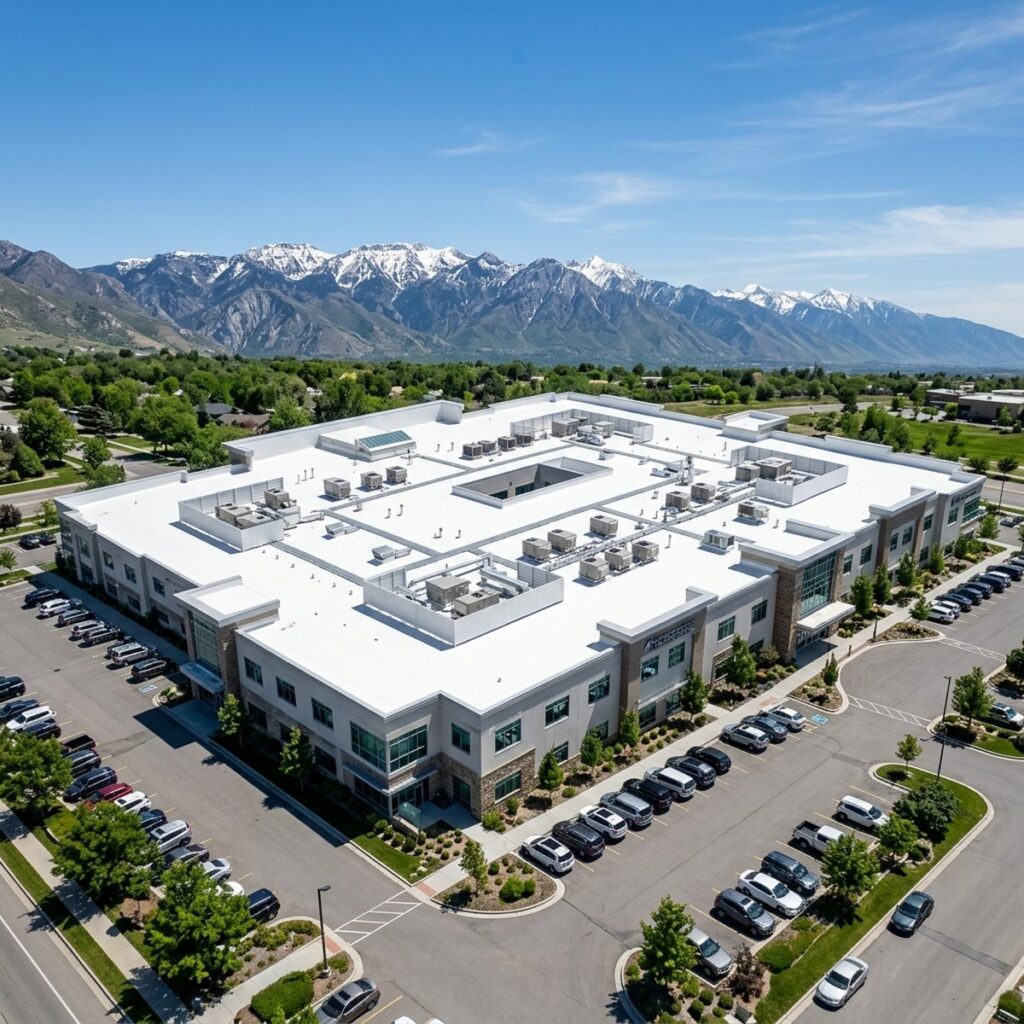
Strong Contractors installs, replaces, repairs and recovers PVC roofing systems for commercial, industrial and high-demand facilities. PVC is a reinforced single-ply membrane with heat-welded seams and strong resistance to grease, oils, chemicals and other rooftop contaminants. It is commonly selected where chemical resistance, sanitation and durable seam performance are important.

Common Applications:
  • Restaurants and Commercial Kitchens
  • Food-Processing Facilities
  • Manufacturing Plants
  • Industrial Facilities
  • Healthcare and Laboratory Buildings
  • Facilities Exposed to Grease or Chemical Discharge
  • Buildings with Demanding Sanitation Requirements
  • New Construction and Reroofing Projects
Strong Contractors' Approach to PVC Roofing

Designed Around Exposure and Welded-Membrane Performance

PVC is often selected where grease, oils or certain chemical exposures place additional demands on the roof. Strong evaluates those conditions alongside the substrate, attachment method, drainage and system compatibility before coordinating the complete assembly.

  • Understand Operational Exposure
    We identify exhaust, grease, chemical discharge and other rooftop conditions that may influence system performance.
  • Coordinate the Complete Assembly
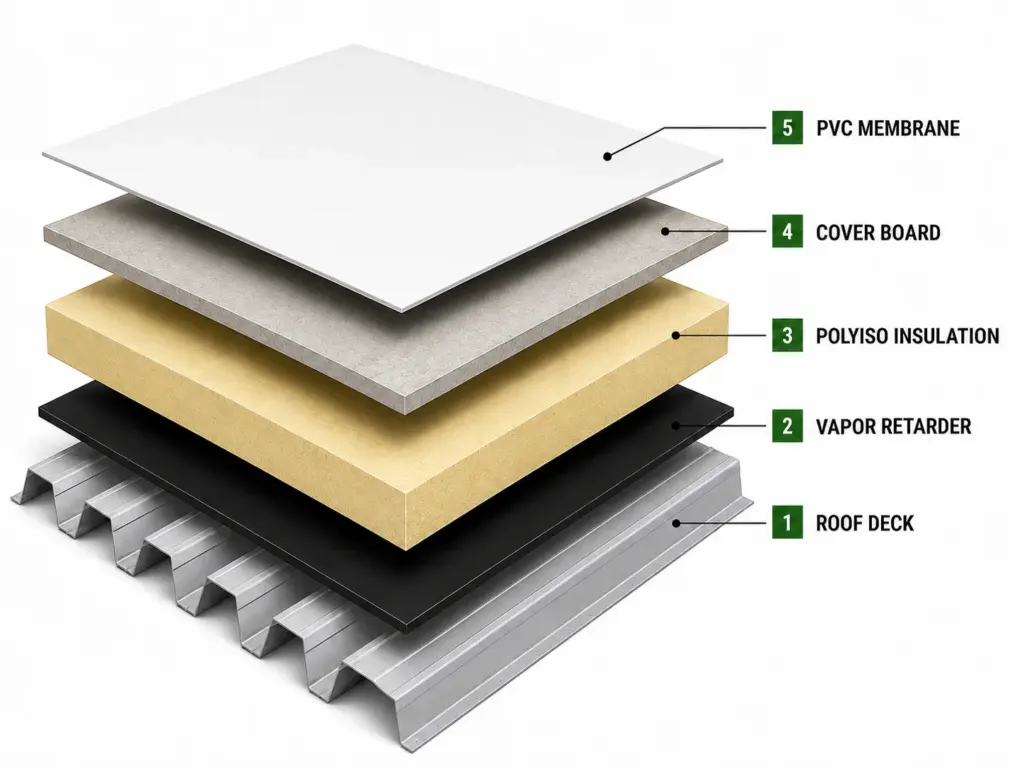
    Deck, insulation, cover board, membrane, attachment and compatible accessories are treated as one system.
  • Control Weld Quality
    Test welds, equipment settings and completed seams are checked as membrane and ambient conditions change.
  • Protect High-Exposure Details
    Drains, discharge areas, curbs, penetrations and transitions receive focused, compatible detailing.
Fit Check

Does your roof need PVC?

Usually a Good Fit

  • Kitchen exhaust fans discharge grease onto the roof
  • Process vents release oils or chemicals the manufacturer lists as compatible
  • Sanitation requirements make roof cleanliness part of operations
  • You want welded seams and a light surface on a high-exposure roof
  • The roof will carry a vegetated or rooftop garden assembly

Usually Not a Fit

  • Nothing harsh reaches the roof, so TPO would cost less
  • The new roof has to weld directly to existing TPO
  • The chemicals your building vents are not on the manufacturer's compatibility list
Our Process

Built Around What the Building Puts on the Roof

On a PVC roof, exposure drives the details. The work starts with how the building operates, not with the membrane.

  1. Review Building Operations

    We talk with facility staff about cooking, cleaning and process schedules, roof access rules and sanitation requirements before setting the scope.
  2. Confirm Chemical Compatibility

    The list of what the building vents goes to the membrane manufacturer. Their compatibility data sets the membrane grade and flags areas that need added protection.
  3. Plan Grease and Runoff Control

    Containment at exhaust fans, walkway pads to serviced equipment and drainage that carries residue off the roof are designed into the layout from the start.
  4. Install in Phases

    Insulation, cover board and membrane go down in phases planned around kitchens, production lines or lab operations that cannot stop for the roof.
  5. Inspect and Hand Over a Care Plan

    Seams and details are inspected, the manufacturer reviews the roof for warranty and you receive a cleaning and inspection schedule matched to the exposure.
System Specs

Typical PVC System Specs

SpecTypical Value
MembraneReinforced polyvinyl chloride (PVC), single ply
SeamsHot-air welded
ResistanceGrease, oils and many chemicals; confirmed against manufacturer data
ThicknessTypical: 50 to 80 mil
AttachmentMechanically attached or fully adhered
CompatibilityDoes not weld to TPO; transitions need a dedicated detail
WarrantyNo Dollar Limit (NDL) manufacturer warranties, typically 10 to 20 years depending on the system
Manufacturer partnersElevate, GenFlex, RPI and GAF
PVC roof assembly layers: roof deck, vapor retarder, polyiso insulation, cover board, PVC membrane
Pricing

What Drives the Cost

PVC typically costs more than TPO, so the first question is whether the exposure calls for it. After that, these factors shape the price.

  • Exposure Grade

    Some roofs need a membrane formulation rated for specific oils or chemicals, which can carry a higher material cost.

  • Grease and Runoff Control

    Containment, sacrificial walkway pads and added detailing at exhaust fans add material and labor where discharge is heavy.

  • Working Around Operations

    Kitchens, food lines and labs often limit work hours, noise, odors and roof access, which can stretch the schedule.

  • Existing Roof and Transitions

    Tear-off versus recover, and tie-ins to adjacent roofs of a different material, change the scope.

  • Warranty Term

    Longer manufacturer warranties raise thickness and inspection requirements.

Compare Options

PVC vs. TPO vs. EPDM Under Grease and Chemicals

PVC Roofing SystemsTPO Roofing SystemsEPDM Roofing
Grease and oil resistanceHighModerate; varies by formulationLow; oils swell rubber
SeamsHot-air weldedHot-air weldedPrimer and seam tape
Typical surfaceWhite or lightWhiteBlack
Relative material costHigherModerateModerate
Sanitation-sensitive roofsCommon choiceWhere exposure is lightRarely chosen
Typical fitKitchens, food plants, labsGeneral commercial and industrialLarge, simple, cold-climate roofs
FAQ

PVC Roofing Questions

Do restaurants need a PVC roof?

Not always, but a restaurant with exhaust fans on the roof is the classic case for PVC. Grease vented from kitchen hoods settles on the membrane and can soften or break down many roofing materials over time. PVC holds up to that exposure, and containment at the fans keeps most grease off the roof field.

What is the difference between PVC and TPO roofing?

Both are reinforced thermoplastic membranes with hot-air welded seams and a light surface. PVC is formulated for stronger resistance to grease, oils and many chemicals, and it usually costs more. TPO is the common choice when nothing harsh reaches the roof, so choose based on what reaches your roof.

Can PVC be welded to TPO?

No. PVC and TPO are different polymers and do not form a reliable weld. Where a new PVC area meets an existing TPO roof, the transition needs its own detail, typically a separation at a curb, edge or expansion joint, built the way both manufacturers specify.

Is PVC roofing resistant to all chemicals?

No membrane resists everything. PVC handles grease, oils and many chemicals, but some solvents and process discharges can still attack it. We compare what your building actually vents against the manufacturer’s compatibility data before choosing the membrane grade, and add protection where the data says it is needed.

Is a PVC roof fire resistant?

PVC membranes resist fire and do not readily support burning, but fire ratings are assigned to the complete tested roof assembly: deck, insulation, cover board and membrane together. The assembly is built to the rating your building code and insurer require, not chosen on the membrane alone.

Can PVC be used under a rooftop garden?

Yes. PVC is commonly used under vegetated roofs and rooftop gardens. The full assembly matters: protection layers, drainage and any root barrier follow the manufacturer’s vegetated-roof requirements so the membrane underneath stays protected and can still be serviced. Those requirements belong in the garden design from the start.

How do you maintain a PVC roof near kitchen exhaust?

Empty or replace grease containment on schedule, clean residue from the membrane around the fans, and keep drains clear so runoff does not pond. Inspect seams and flashings near the fans more often than the rest of the roof, since that is where wear shows first.

Related Services

Explore More Commercial & Industrial Roofing Solutions

TPO Roofing Systems

Read More

EPDM Roofing

Read More

Metal Roofing & Retrofits

Read More

Built-Up Roofing (BUR)

Read More

Modified Bitumen Roofing

Read More