What Is TPO Roofing?

TPO is a white, heat-welded single-ply membrane used for new and replacement low-slope roofs on warehouses, plants, schools, hospitals and offices. It fits owners who want a reflective roof at a moderate cost, and it can often go over an existing roof that is still dry. Heavy grease or chemical exposure usually points to PVC instead.

The modern standard in flat roofing

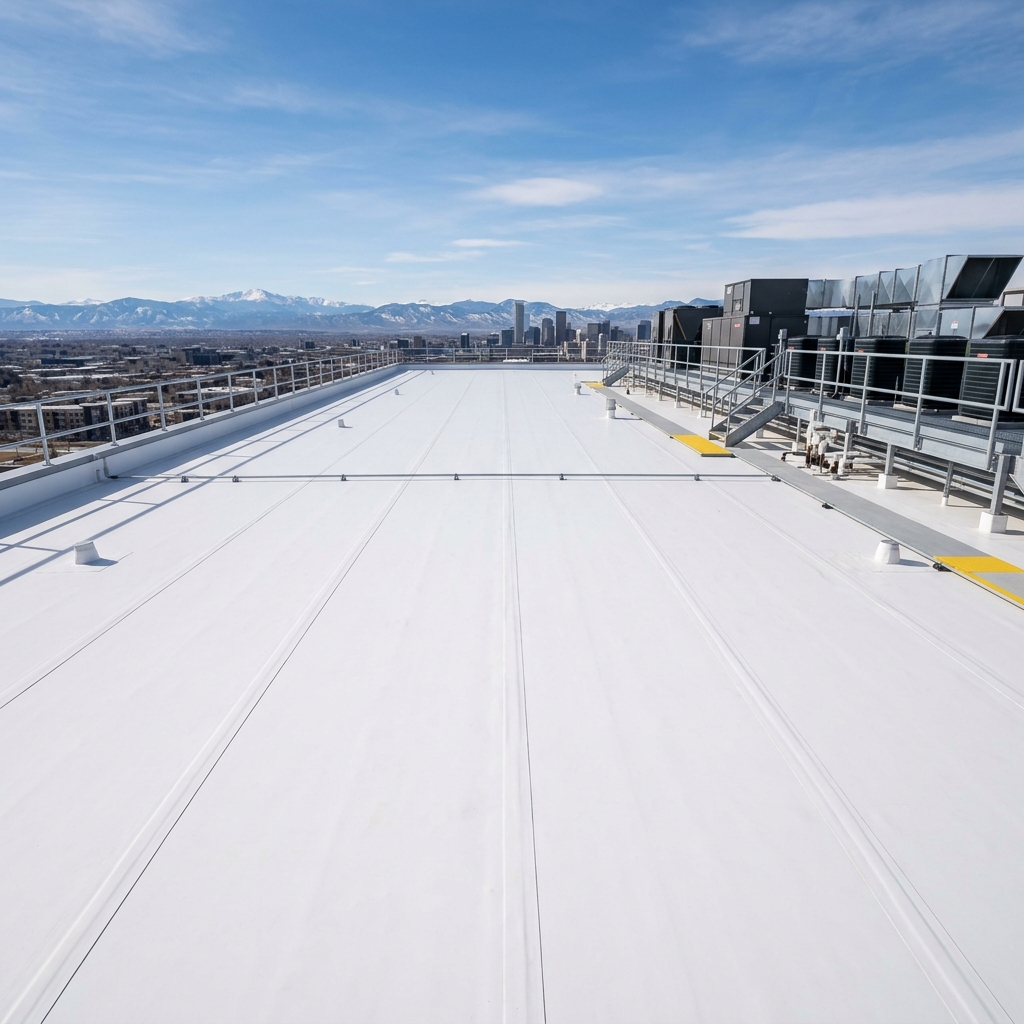
Strong Contractors installs, replaces, repairs and recovers TPO roofing systems for commercial, industrial, institutional and government facilities. TPO, or thermoplastic polyolefin, is a reinforced single-ply membrane used on low-slope roofs and joined with heat-welded seams. It is commonly selected for its reflective surface, flexible installation options and strong balance of durability, energy performance and cost.

Common applications:
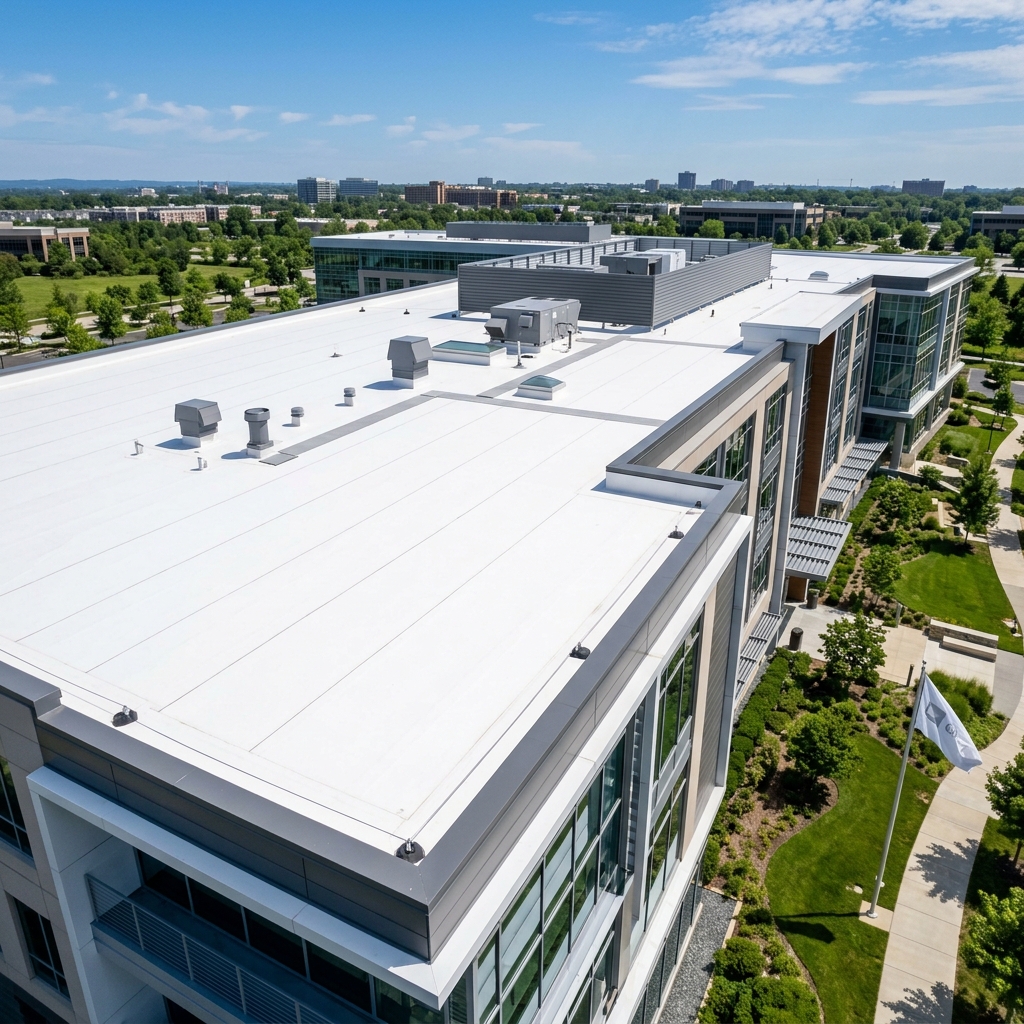
  • Warehouse & Distribution Center
  • Manufacturing and Industrial Facilities
  • Schools and Institutional Buildings
  • Healthcare Facilities
  • Commercial and Retail Properties
  • Government and Military Facilities
  • New Construction and Reroofing Projects
  • Qualifying Roof Recover Applications
Strong Contractors’ Approach to TPO Roofing

The Assembly Matters as Much as the Membrane

TPO performance depends on the relationship between the deck, insulation, cover board, attachment, perimeter securement, seams, flashings and drainage. Strong treats those components as one integrated roof assembly and maintains direct control of the work through self-performing crews.

  • Understand the Building
    We review the deck, existing assembly, drainage, rooftop equipment and wind-exposure conditions before installation begins.
  • Coordinate the Complete Assembly
    Insulation, cover board, membrane attachment, perimeter enhancements and flashings are coordinated as one system.
  • Control the Installation
    Fastening or adhesion, membrane placement, test welds and welder settings are monitored as field conditions change.
  • Execute the Critical Details
    Drains, curbs, penetrations, walls, edges and transitions are continuously tied into the field membrane.
Fit Check

Is TPO the right membrane for your roof?

Usually a Good Fit

  • You need a replacement or recover on a large low-slope roof
  • Cooling load matters and you want a white, reflective surface
  • The current roof is dry, so a recover can replace a full tear-off
  • Solar arrays or rooftop equipment have to come off and go back on in a tight window
  • You want welded seams without paying for PVC-level chemical resistance

Usually Not a Fit

  • Kitchen exhaust, oils or process chemicals reach the roof (PVC is the usual answer)
  • The existing roof is still sound and a coating restoration would add years for less
  • The roof is steep-slope or architectural and needs metal panels
  • Dense penetrations and irregular geometry would detail more easily with a seamless fluid-applied system
Attachment Options

Three Ways to Hold a TPO Roof Down

Each method holds the membrane against wind in a different way. The deck, the building and the roof’s weight limits point to the right one.

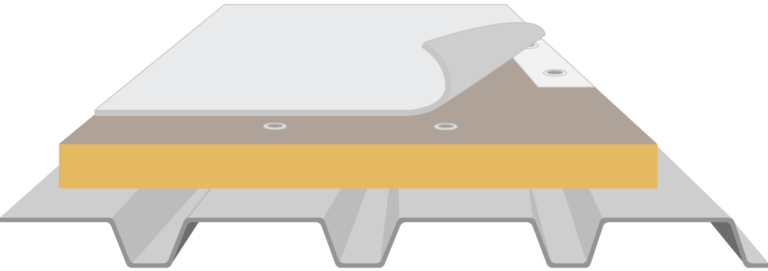
  • Diagram of a mechanically attached single-ply membrane, peeled back to show plate fasteners through the insulation into a metal deck

    Mechanically Attached

    Fastened with screws and plates. A lightweight, secure option for most building types and climates, with easy access for maintenance.

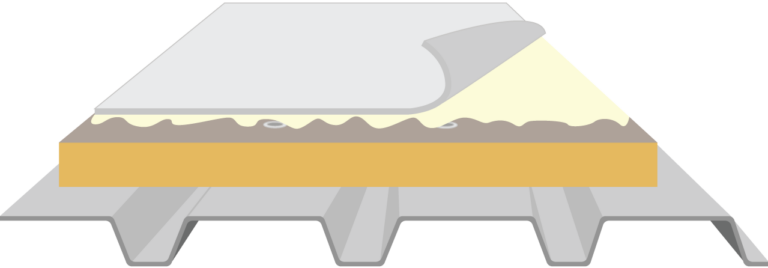
  • Diagram of a fully adhered single-ply membrane, peeled back to show adhesive over the insulation on a metal deck

    Fully Adhered

    Bonded directly to the substrate, so the whole sheet stays stable and watertight, with no loose membrane for wind to catch.

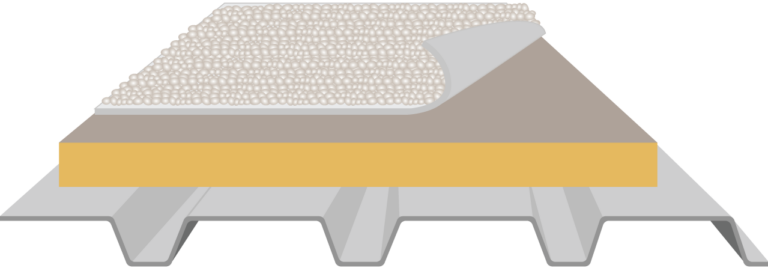
  • Diagram of a ballasted single-ply roof: river rock ballast over a loose-laid membrane, insulation and a metal deck

    Ballasted

    Gravel or pavers hold the membrane down and keep it stable against wind uplift. A cost-effective, quick install for large roofs built to carry the weight.

    Learn More
Our Process

From Roof Survey to Warranty Inspection

Survey, assembly design and seam work set how long a TPO roof lasts. Each step below shows where one of those choices gets made.

  1. Survey the Existing Roof

    We document the membrane, insulation and deck, check for trapped moisture, and log every drain, curb and unit. That record decides whether a recover is allowed or a tear-off is needed.
  2. Set the Assembly and Attachment

    Insulation thickness, cover board, membrane thickness and the fastening or adhesive pattern are set to meet code, wind design and the manufacturer's warranty requirements.
  3. Sequence the Work Around the Building

    Sections are phased so the building stays dry and running. When solar arrays or equipment must move, removal, storage and reinstallation are scheduled with the owners of those systems.
  4. Install Section by Section

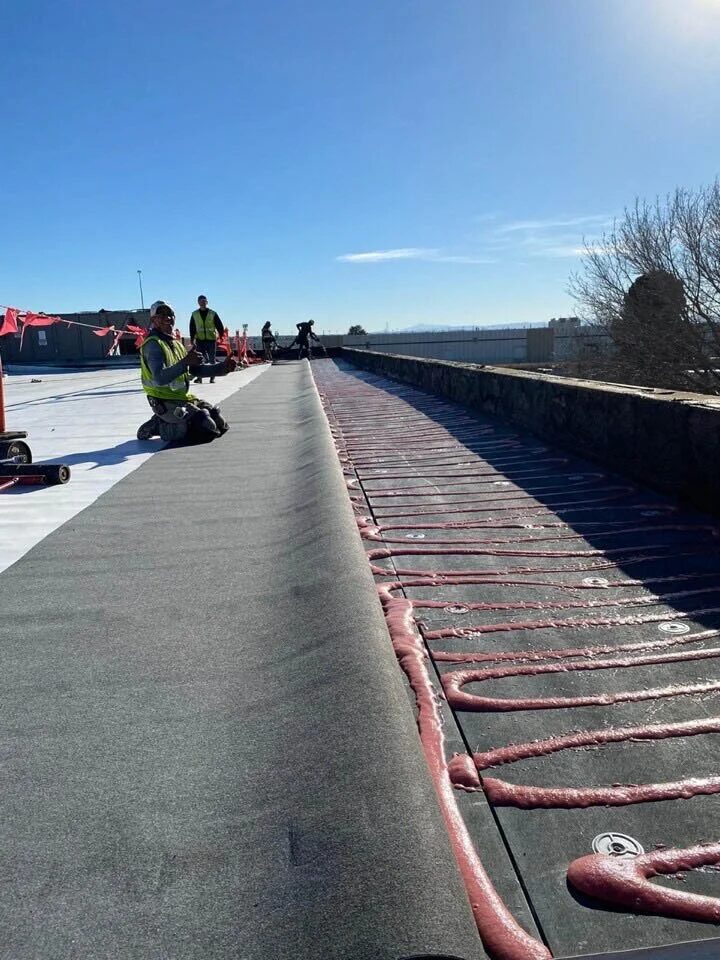
    Crews set insulation, fasten or adhere the membrane and weld the laps one area at a time, tying each finished area in so it stays watertight between work days.
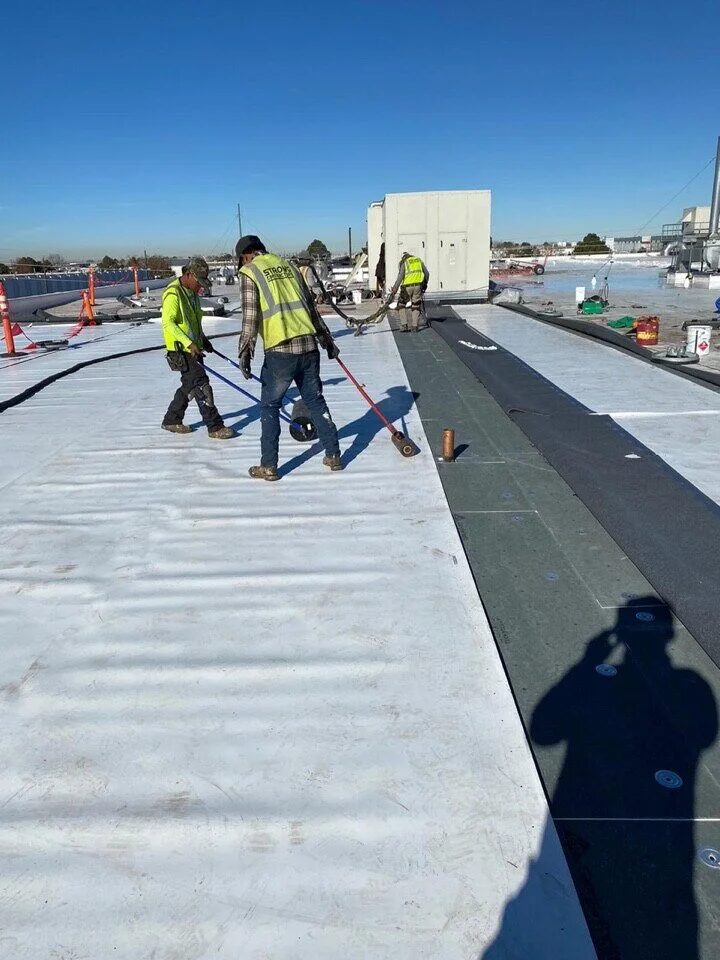
    Crew rolling TPO sheets into the adhesive
  5. Probe the Seams and Review the Details

    Welded seams are probed along their length and repaired where needed, and drains, curbs and edges are reviewed before the manufacturer's inspection.
    Crew working along a TPO seam with adhesive beads
  6. Close Out and Register the Warranty

    We register the roof with the manufacturer, then hand you the warranty, closeout documentation and maintenance guidance that keeps the warranty in good standing.
System Specs

Typical TPO System Specs

SpecTypical Value
MembraneReinforced thermoplastic polyolefin (TPO), single ply
SeamsHot-air welded
SurfaceWhite, reflective
AttachmentMechanically attached, fully adhered or ballasted
ThicknessTypical: 45, 60 or 80 mil; heavier sheets are common where hail is frequent
WarrantyNo Dollar Limit (NDL) manufacturer warranties, typically 10 to 20 years depending on the system
ApplicationsNew construction, tear-off replacement or recover over a qualifying roof
Manufacturer partnersElevate, GenFlex, RPI and GAF
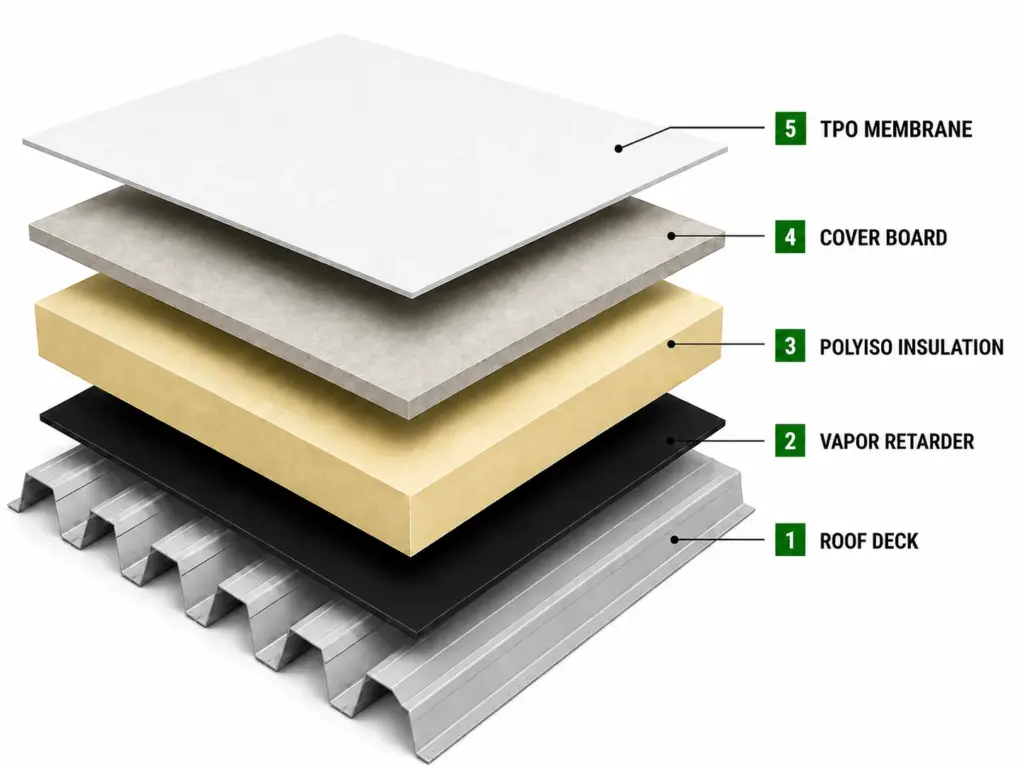
TPO roof assembly layers: roof deck, vapor retarder, polyiso insulation, cover board, TPO membrane
Pricing

What Drives the Cost

A TPO price moves more with what sits under and around the membrane than with the membrane itself. These are the factors that shape a TPO quote.

  • Tear-Off or Recover

    Recovering a dry roof avoids demolition and disposal. Wet insulation found in the survey has to come out, and how much of it there is changes the scope.

  • Insulation to Meet Code

    A replacement usually has to meet the current energy code, and the added insulation is often a large share of the total.

  • Wind Design and Attachment

    Building height, exposure and roof zones set fastener density or adhesive coverage. Corners and perimeters need more of both.

  • Solar, Equipment and Access

    Arrays, units and curbs that must be lifted, moved or flashed add labor, as do crane access and work limits on occupied sites.

  • Membrane Thickness and Warranty Term

    A thicker sheet and a longer manufacturer warranty add material and inspection requirements.

Compare Options

TPO vs. EPDM vs. Spray Foam

TPO Roofing SystemsEPDM RoofingSpray Foam (SPF) Roofing
SurfaceWhite, reflectiveUsually blackCoated, typically light colored
SeamsHot-air weldedPrimer and seam tapeSeamless
InsulationSeparate board layerSeparate board layerThe foam is the insulation
Over an existing roofRecover when dry and eligibleRecover when dry and eligibleSprayed over many existing roofs
Grease and oil exposureModerate; PVC is preferred for heavy exposureLow; oils swell rubberDepends on the topcoat
Long-term careKeep clean, check seamsWatch laps and edgesRecoat at end of coating life
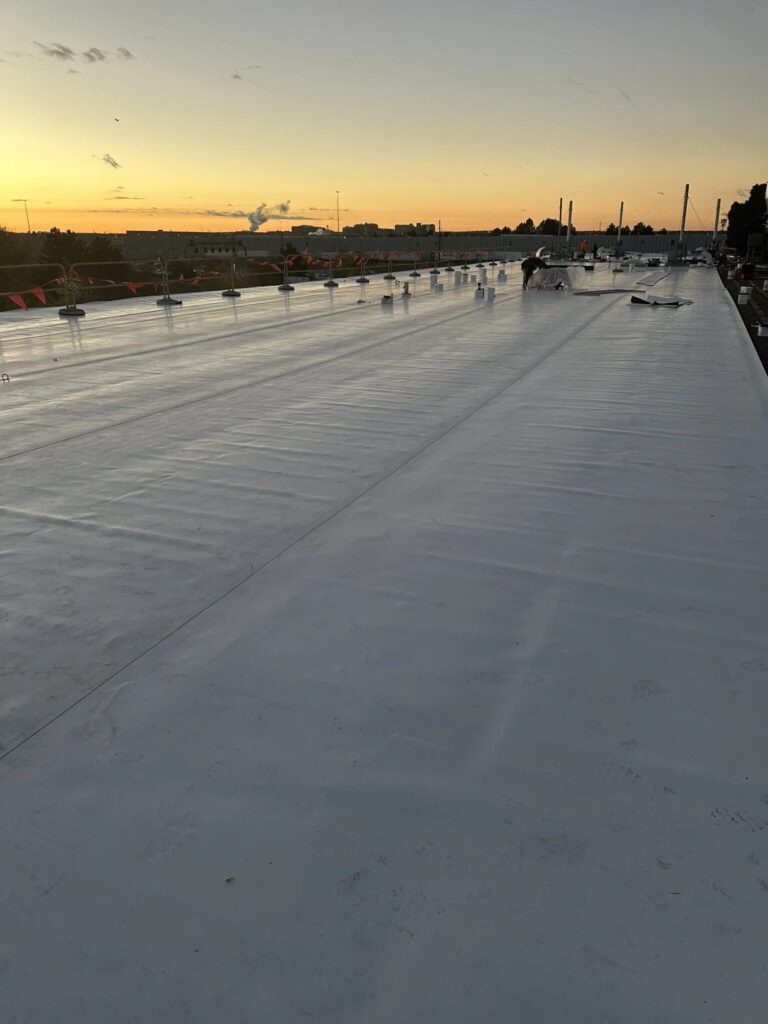
New TPO roof membrane at sunrise on the Kaiser Permanente laboratory
Featured Project

Kaiser Permanente

New TPO membrane on a 370,000 square foot laboratory facility, with the existing solar panels removed, stored, and reintegrated. TPO installation took 15 days.
370,000 SF
View Case Study
FAQ

TPO Roofing Questions

How long does a TPO roof last?

No Dollar Limit warranties on TPO systems typically run 10 to 20 years, and that warranty is the figure we quote for your roof. Published lifespans vary widely, so we base the answer on your specific assembly instead of a generic number. Membrane thickness, attachment, hail, foot traffic and maintenance all play a part, and regular inspections help keep the coverage in good standing.

Can TPO be installed over my existing roof?

Often, yes. A recover works when the existing roof is dry, stable and allowed by code and the manufacturer, usually with a cover board or insulation layer in between. Codes typically limit how many roofs can be stacked on a building, and wet insulation has to be removed, so a moisture survey comes first.

What happens to rooftop solar panels during a TPO reroof?

The panels come off, get stored and go back on, and the solar company usually has a say in the new roof. At a 370,000-square-foot Kaiser Permanente laboratory, solar covered 75 percent of the roof. Strong removed and stored the panels, installed a TPO system the solar company approved, and reintegrated the array.

How long does it take to install a TPO roof?

Strong installed TPO across all 370,000 square feet of the Kaiser Permanente laboratory in 15 days, using advanced adhesive application techniques that sped up the work. Your schedule will follow roof size, tear-off, access, weather and how the building operates around the work. Crew size and attachment method make a large difference too.

Does a white TPO roof lower cooling costs?

A white TPO surface reflects much of the sun’s heat instead of absorbing it, which lowers roof temperature and the load on cooling equipment. Actual savings depend on climate, insulation and how the building is used. Reflectivity drops as dirt builds up, so periodic cleaning helps the roof keep performing.

Will hail damage a TPO roof?

Hail can bruise or puncture any single-ply membrane, especially over soft insulation. On hail-prone roofs, like many along Colorado’s Front Range, a thicker membrane and a high-density cover board are commonly specified. After a major storm, have the roof inspected, because small punctures are easy to miss and slow to show up as leaks.

What are the disadvantages of TPO roofing?

Seam quality depends on welding skill and conditions, so installation control matters as much as the product. Formulations differ between manufacturers. TPO is not the first choice where grease or strong chemicals reach the roof, which is where PVC fits. And like any membrane, it needs periodic checks for punctures and loose flashings.

Related Services

Explore More Commercial & Industrial Roofing Solutions

EPDM Roofing

Read More

PVC Roofing Systems

Read More

Metal Roofing & Retrofits

Read More

Built-Up Roofing (BUR)

Read More

Modified Bitumen Roofing

Read More