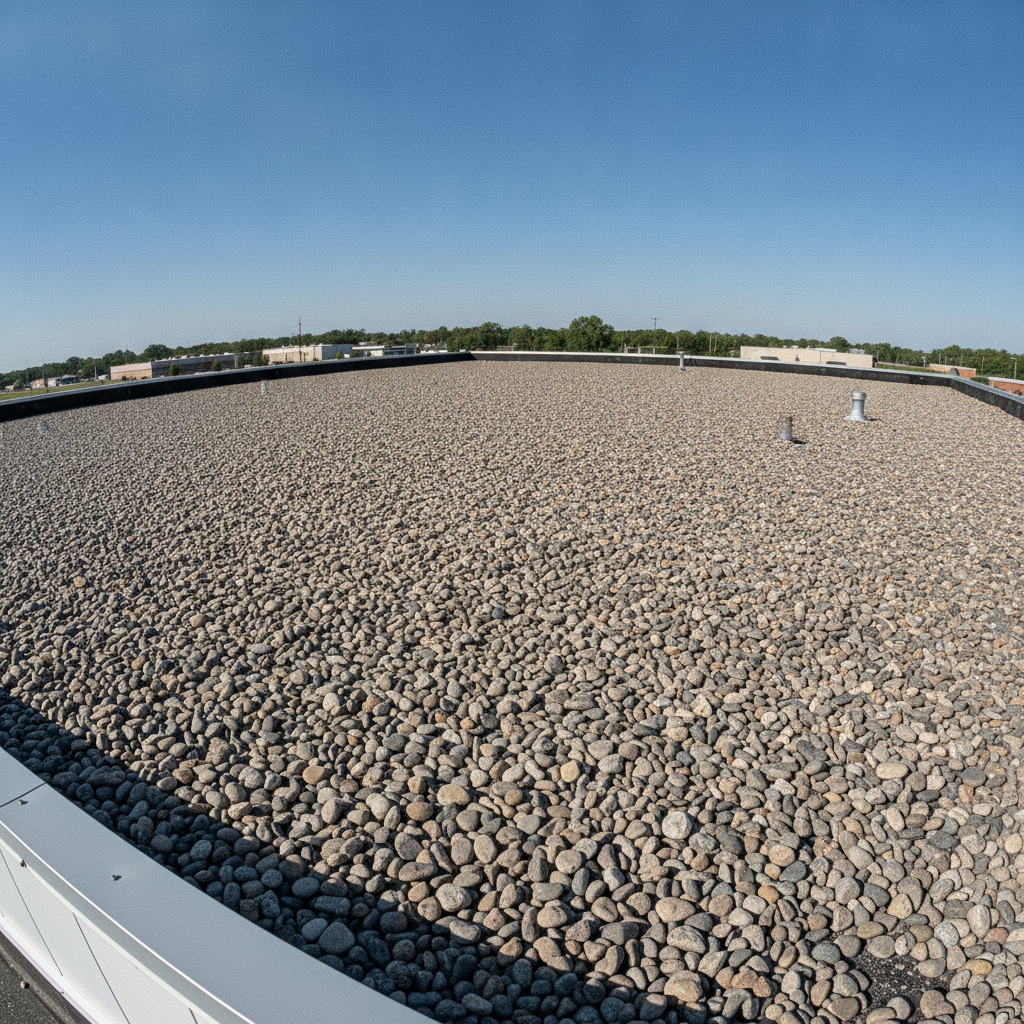
Ballasted roof systems — membranes held in place with loose stone or paver ballast rather than fully adhered or mechanically fastened — were a common commercial roofing choice for decades. They still show up on a lot of older buildings, and property owners inheriting one often have questions about whether to keep it, repair it, or remove the ballast entirely.
Why Ballasted Systems Were Popular
Ballast systems have real advantages that explain their long run: they’re relatively inexpensive to install, the loose-laid membrane isn’t fully adhered so there’s less stress on seams from thermal movement, and the stone ballast itself provides UV protection that extends membrane life without the membrane needing built-in reflective or protective properties.
Where Ballast Becomes a Problem
The tradeoffs show up over time. Ballast adds significant dead load to the roof structure — a real concern if the building needs rooftop equipment added or the roof is being evaluated for solar. Loose stone also complicates any repair or maintenance work, since ballast has to be moved to access the membrane underneath, and it can migrate toward drains and clog them over time. In high-wind regions, ballast scour — stone displaced by wind uplift — is a genuine roof and safety hazard.

When Removal Makes Sense
Ballast removal typically becomes the right call in a few specific situations: when a building is adding rooftop equipment or solar and needs the added weight off the roof, when the underlying membrane needs full access for inspection or repair, or when the roof is being converted to a fully adhered or mechanically fastened system during a broader renovation. Removal is labor-intensive — the ballast has to be safely collected, staged, and hauled off the roof — but it opens the door to a lighter, easier-to-maintain system going forward.
If you’ve got a ballasted roof and you’re not sure whether it’s still the right system for how the building is being used today, that’s worth a real assessment rather than assuming the original design decision still holds.