The hour after a storm is when a manageable roof problem can turn into a much bigger one — or stay manageable, depending on what happens next. What you do in the first 24 to 48 hours after storm damage has a real effect on repair cost, insurance outcomes, and whether interior damage spreads.
Get Eyes on the Roof — Safely
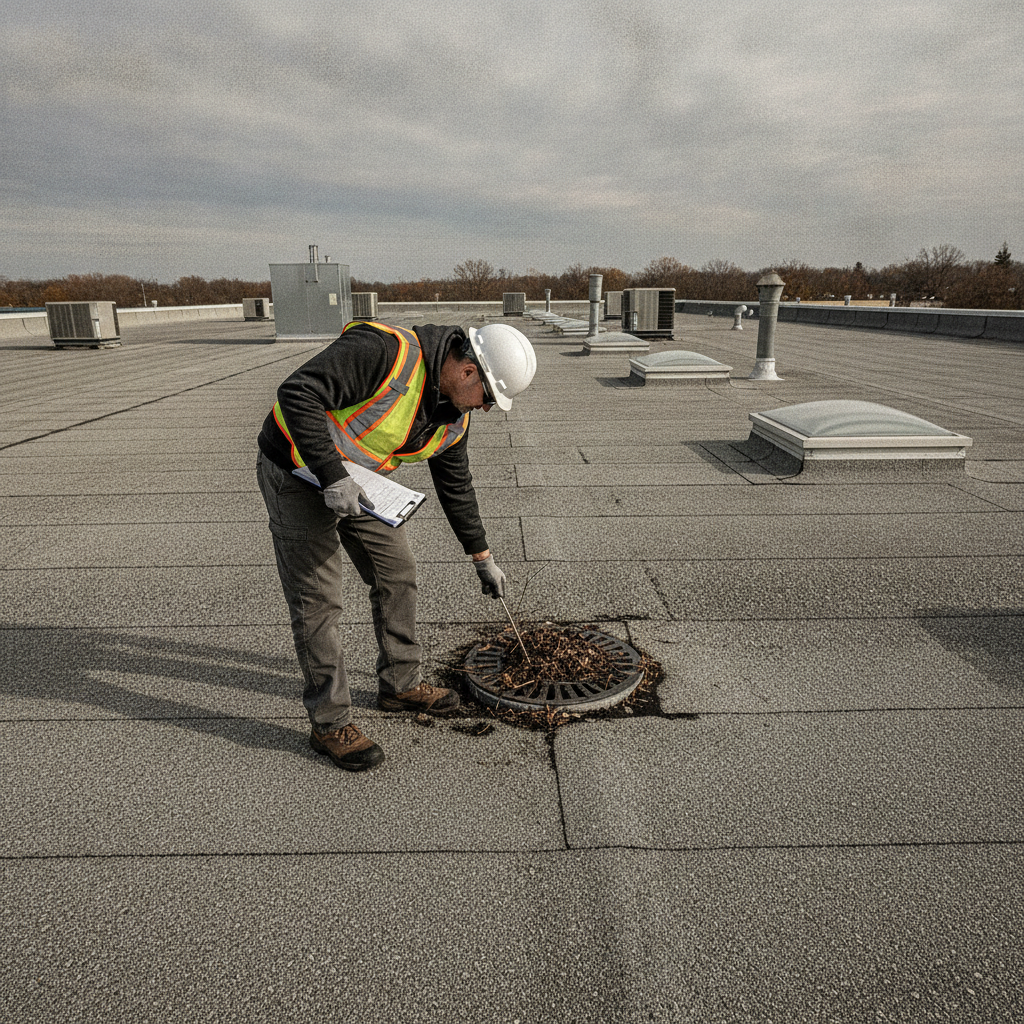
Don’t send facilities staff onto a storm-damaged roof to assess it themselves. Wet membranes, compromised structural areas, and downed lines create real safety risk, and an untrained assessment can miss damage that isn’t visible from a quick walk-through. The first call should be to a roofing contractor who can safely evaluate the full scope — not just the obvious damage.
Stop Water Intrusion Immediately
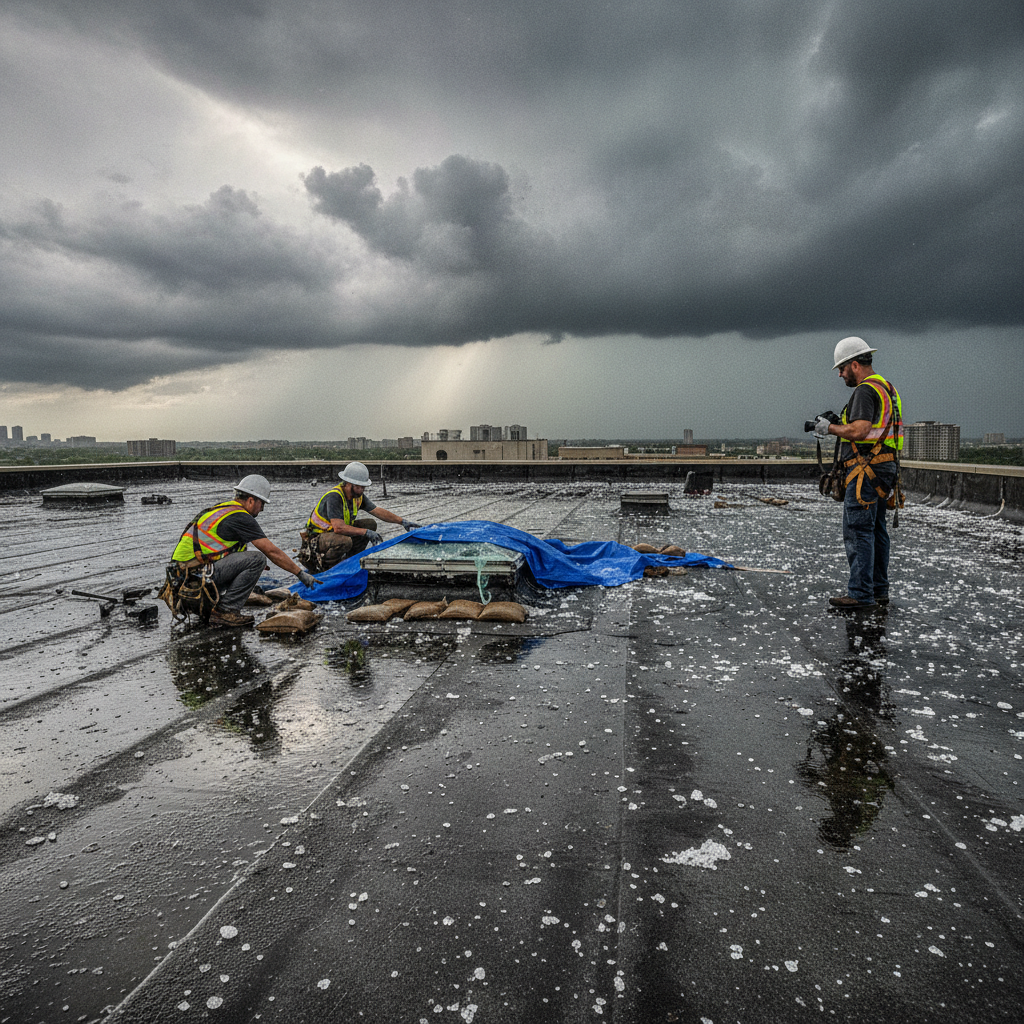
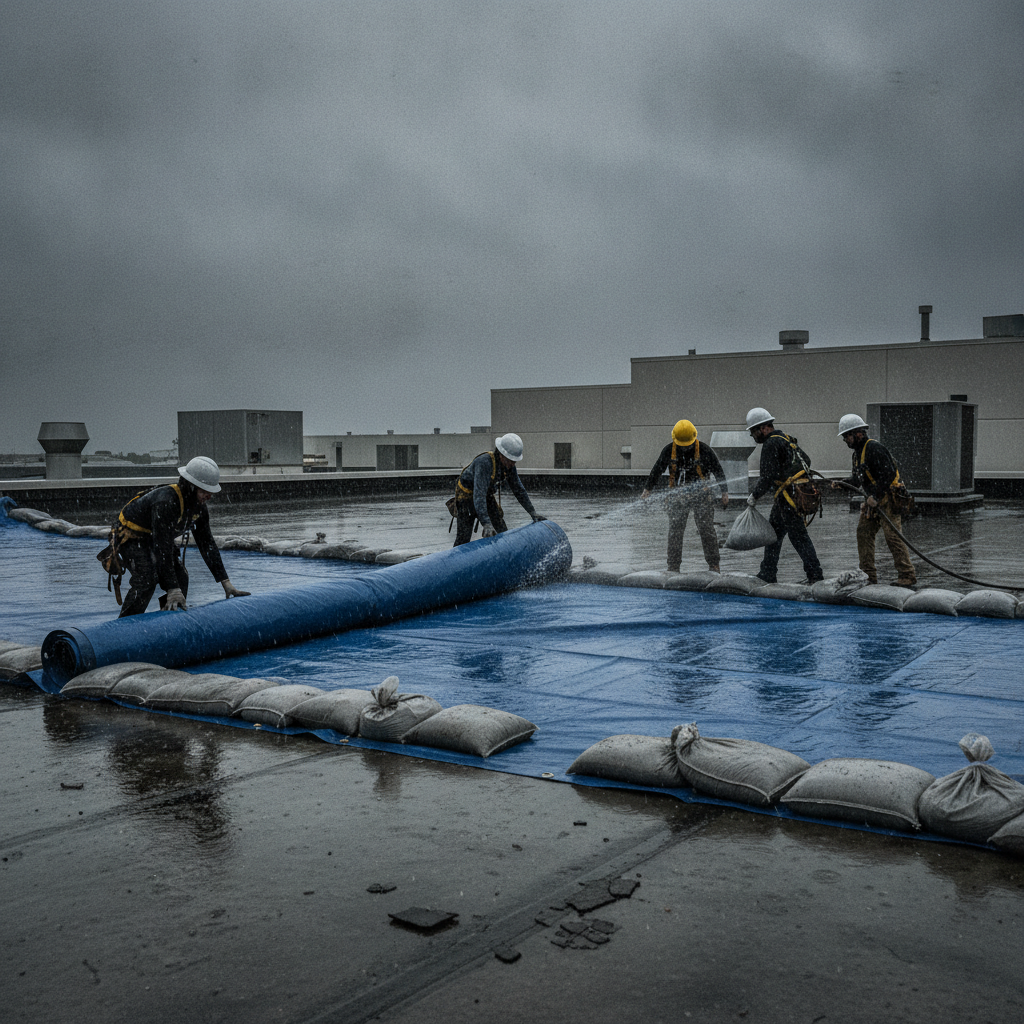
If there’s an active leak, temporary measures — tarping, sealing an obvious breach — can prevent a roof problem from becoming an interior damage problem. This is triage, not repair: the goal is to stop water from reaching insulation, ceiling systems, and whatever’s stored or operating below. Every hour water keeps getting in adds to the eventual cost.
Document Before Anything Gets Repaired
Photos and a written damage assessment, done before any repair work starts, are what insurance claims are built on. This includes obvious damage — punctures, torn membrane, missing flashing — as well as damage that isn’t visually dramatic but affects the roof’s waterproofing, like seam separation or granule loss. A contractor experienced with storm claims knows what an adjuster needs to see.
Get a Full Assessment, Not Just a Patch
Storm damage is rarely limited to the spot that’s obviously leaking. Hail and wind stress an entire roof system, and damage that isn’t actively leaking yet can still compromise the membrane’s long-term performance. A full assessment — not just a patch on the visible problem — is what prevents a second storm from finding the damage the first one already caused but didn’t fully expose.
We keep emergency response crews ready specifically for this window, because the speed of that first response is often what determines how contained the damage stays.