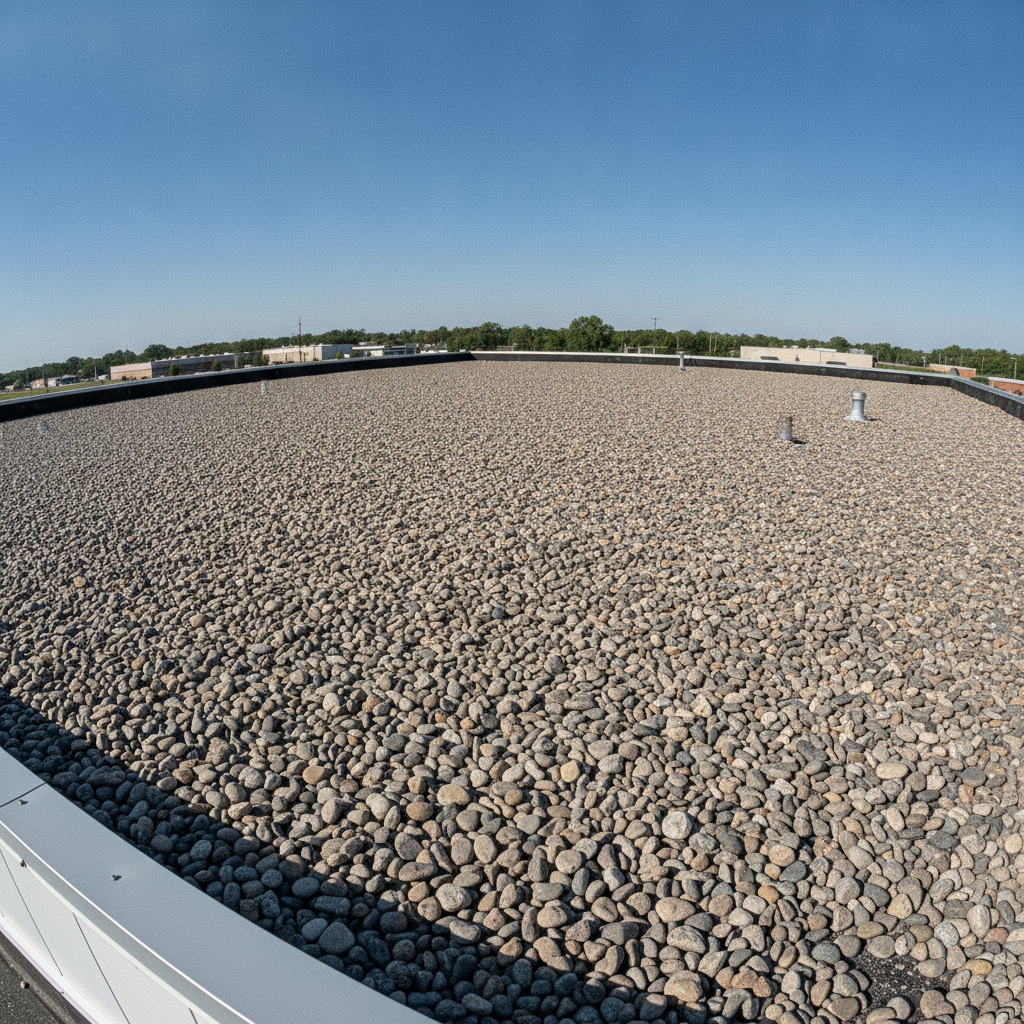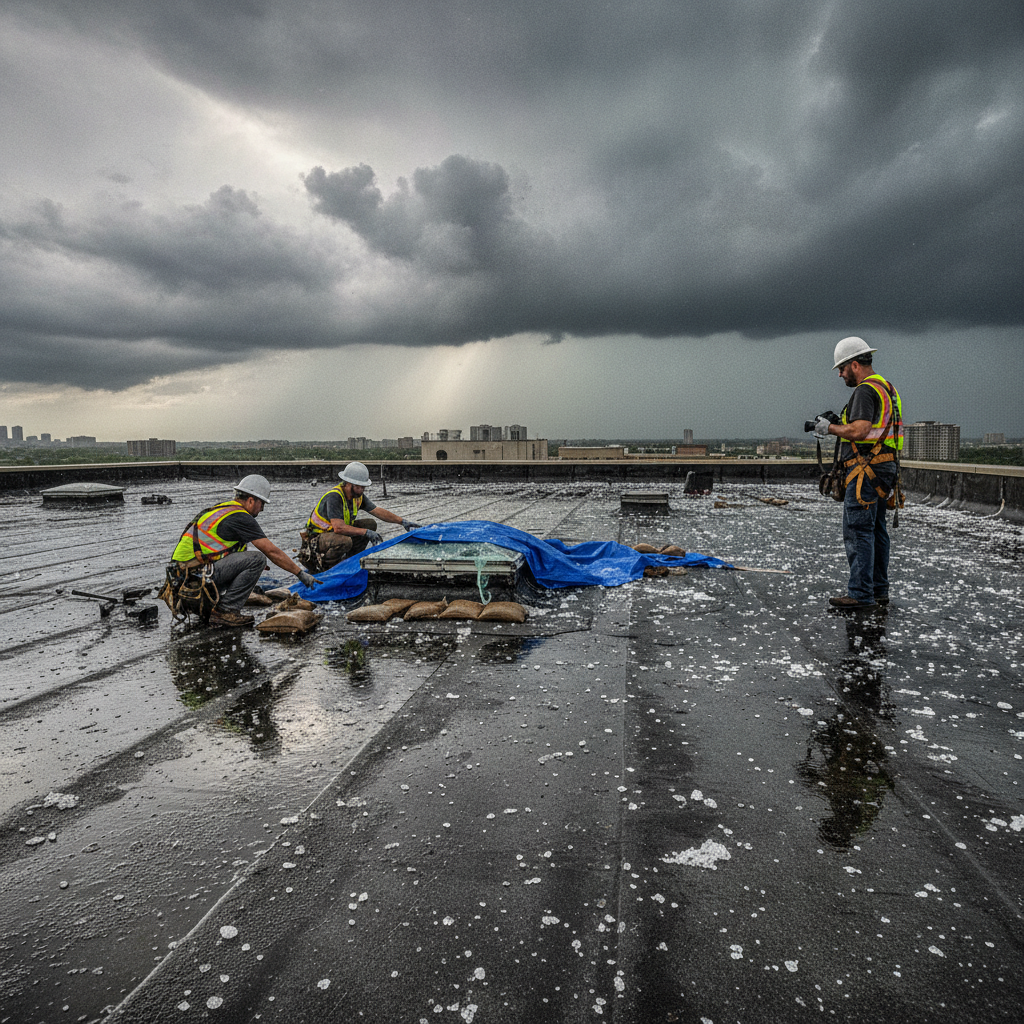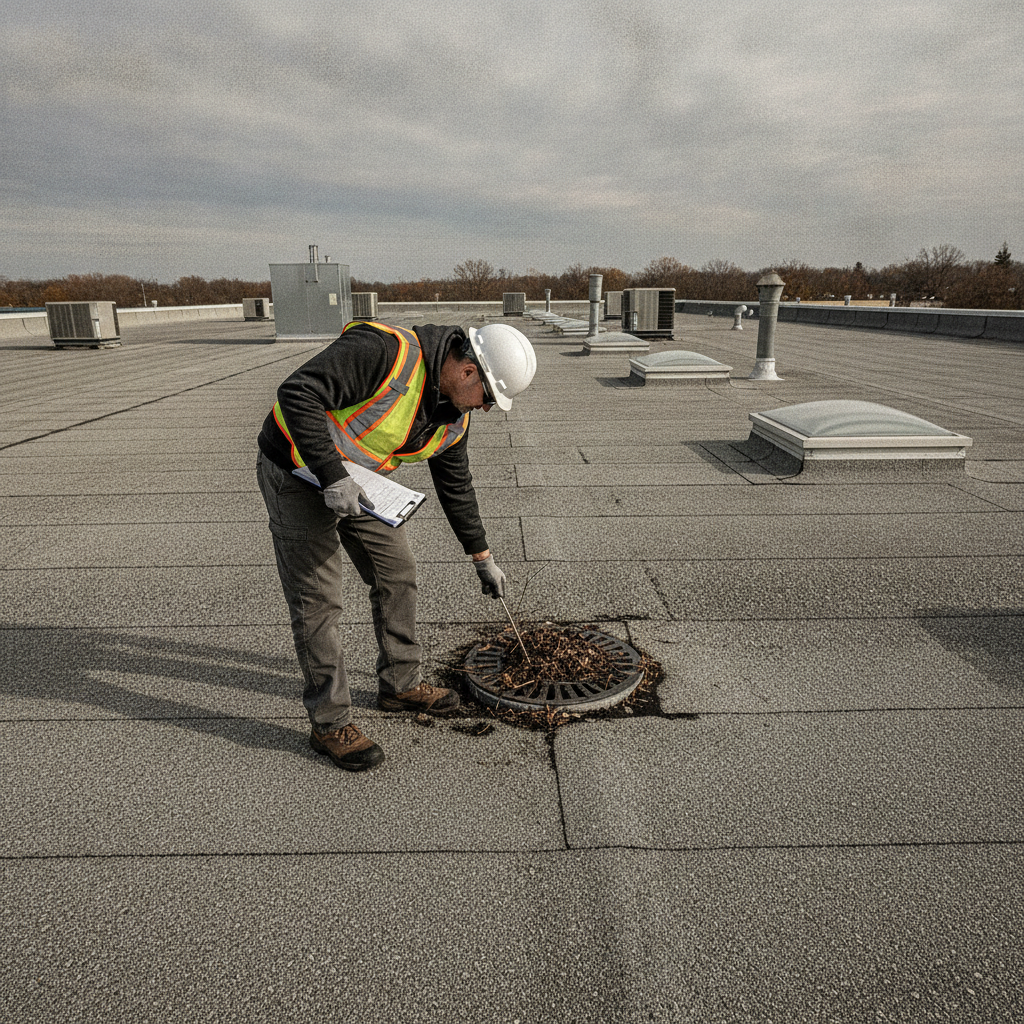
Most commercial roof failures don’t start as a sudden event — they start as a small, ignored issue that had months or years to get worse. A consistent seasonal inspection routine is the cheapest insurance a property owner can buy against an expensive emergency call. Here’s what should actually be on that checklist.
Drainage First, Always
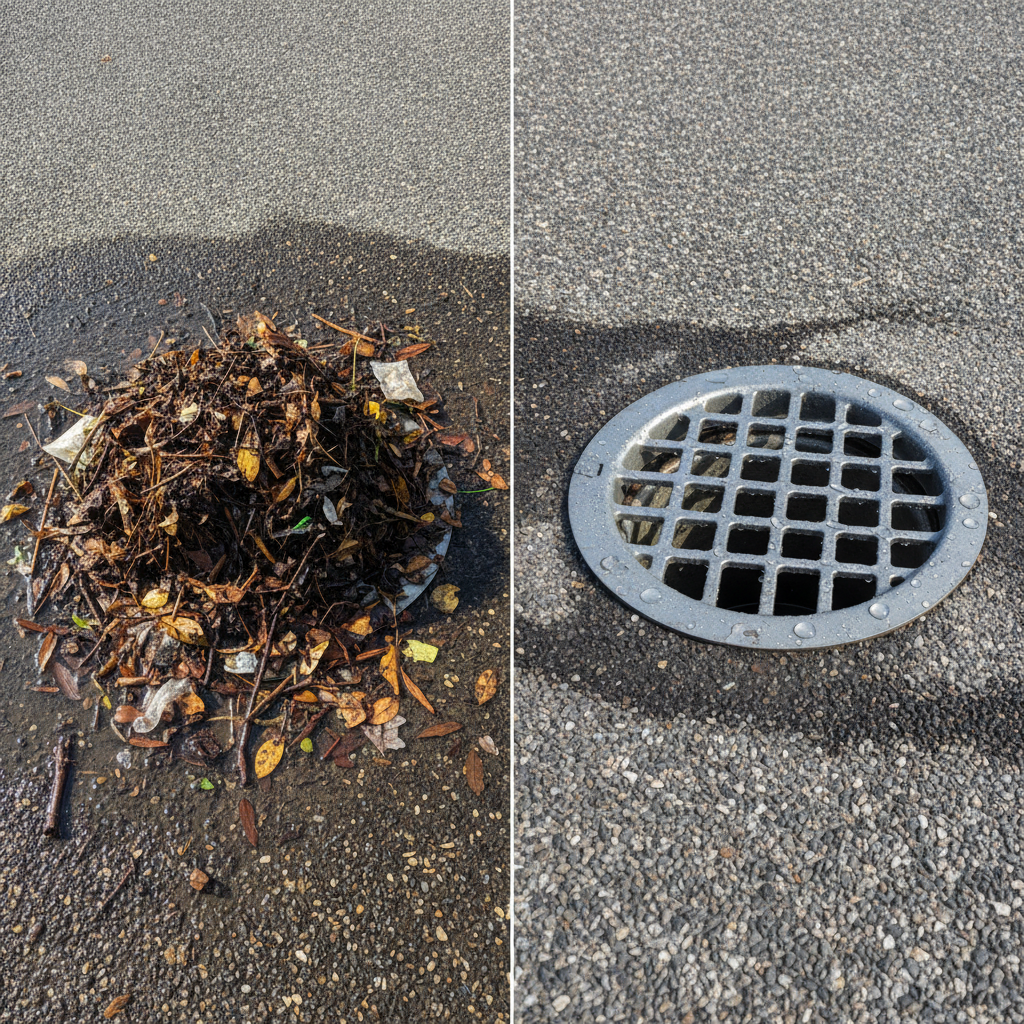
Clogged drains, scuppers, and gutters are the single most common cause of ponding water and, eventually, membrane failure. Every seasonal inspection should start here: are drains clear, is water moving off the roof the way it’s supposed to, and are there any low spots holding water more than 48 hours after rain.
Membrane and Seam Condition
Walk the full roof field, not just the areas visible from the access point. Look for blistering, cracking, or brittleness in the membrane, and check seams for separation — seams are almost always where a roof fails first, long before the field membrane itself gives out.
Flashing and Penetrations
Every pipe, vent, curb, and wall termination is a potential entry point for water. Flashing should be checked for proper adhesion and sealant condition at every penetration, HVAC curb, and roof-to-wall transition — these details fail more often than open membrane field does.
Rooftop Equipment and Foot Traffic Paths
HVAC units, satellite mounts, and other rooftop equipment create wear patterns and potential puncture points from maintenance foot traffic. Confirm equipment pads and walkway protection are still in place and undamaged, and check for any new equipment installed since the last inspection that wasn’t properly flashed or protected.
Document Everything
A seasonal inspection is only as useful as the record it leaves behind. Photos, moisture readings, and a written condition report create a real history of the roof’s trajectory — which is exactly what makes the eventual repair-versus-replace decision straightforward instead of a guess. We build that documentation into every inspection our crews perform, so there’s always a clear record of what changed and when.