A leaking roof is easy to notice. A roof that’s quietly losing its ability to protect your building is not — and that gap is where most commercial property owners get caught off guard, choosing between a patch and a full replacement without a clear way to tell which one they actually need.
Signs You Can Usually Repair
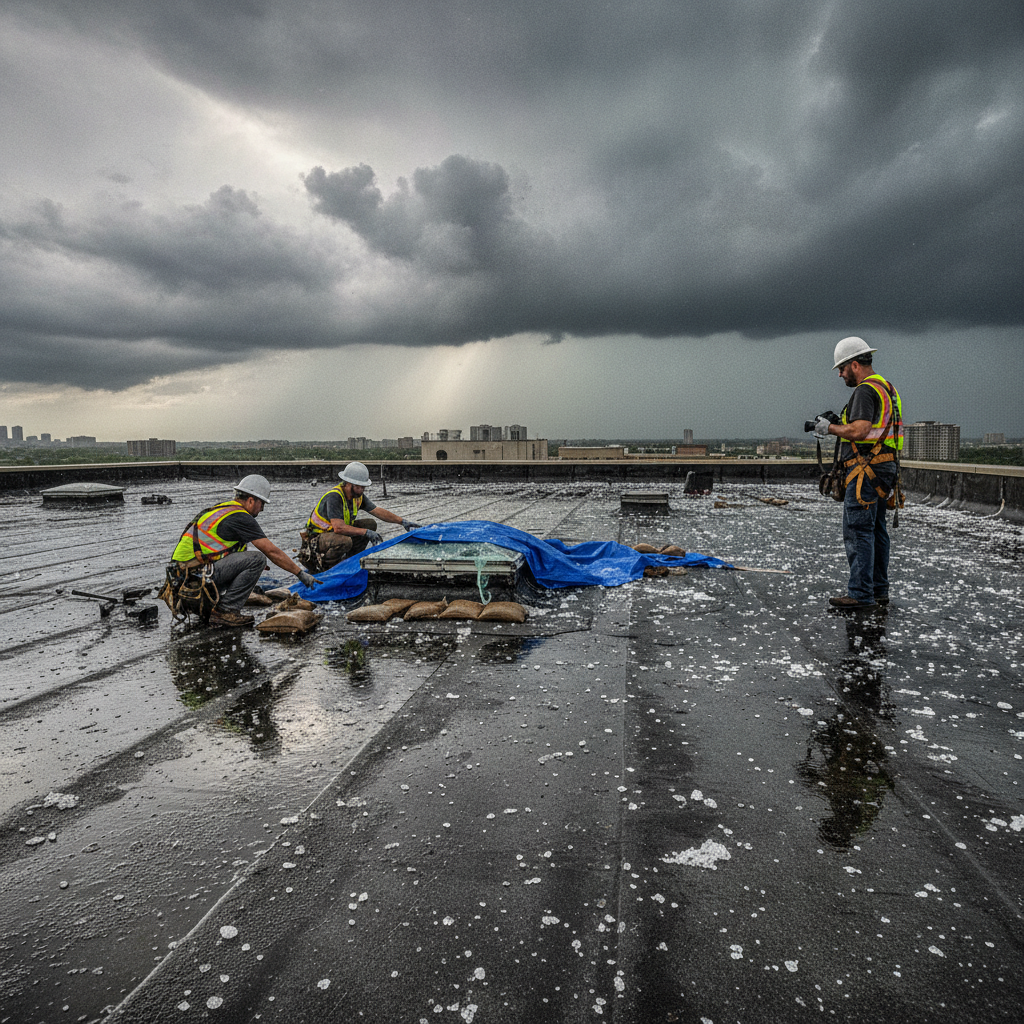
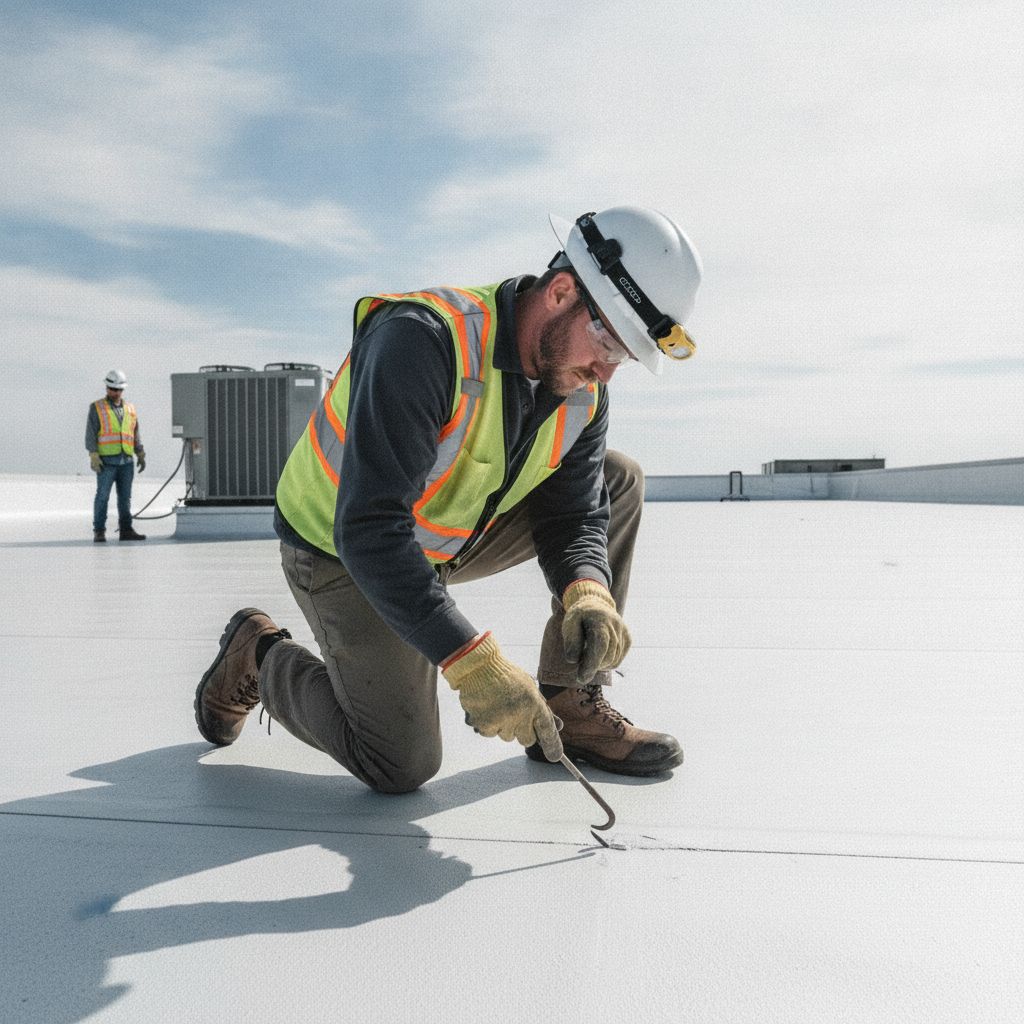
Isolated damage is the best-case scenario. A punctured membrane from foot traffic or dropped equipment, a failed seam in one section, flashing that’s pulled away around a single penetration — these are typically contained problems. If the rest of the roof field is intact, the membrane still has flexibility, and there’s no widespread ponding or saturated insulation underneath, a targeted repair restores the system without disturbing everything around it.
Age matters here too. A roof in the first half of its expected service life with one or two localized issues is almost always a repair candidate, especially if it’s been on a regular inspection schedule.
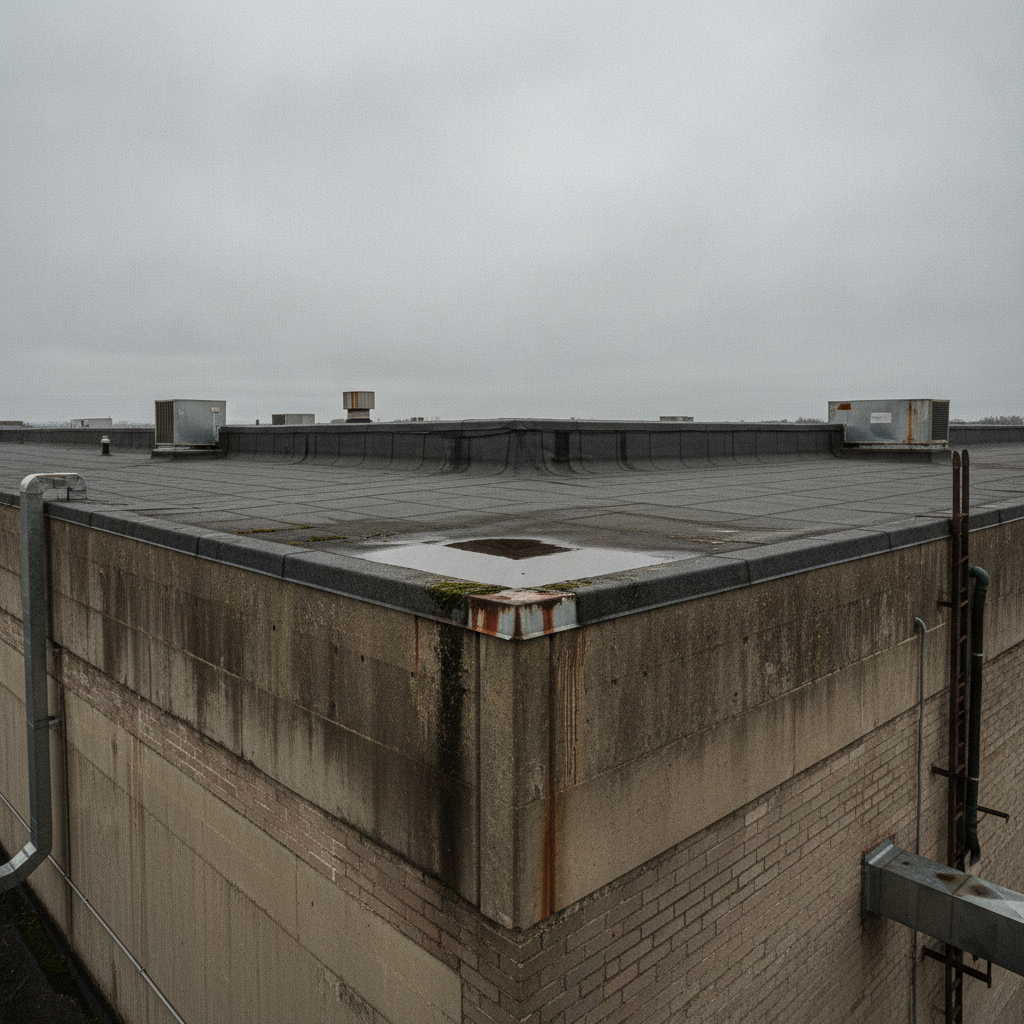
Signs That Point to Replacement
The calculus changes when damage is systemic rather than isolated. Widespread membrane brittleness, seams failing in multiple areas, insulation that’s wet across large sections, or a roof that’s already had several rounds of patch repairs in the same season — these usually mean the system as a whole has reached the end of its service life. At that point, repair costs start compounding without meaningfully extending the roof’s remaining life, and replacement becomes the more defensible spend.
Roof age relative to system type is a useful benchmark: a single-ply membrane nearing or past its expected 20–25 year service life, showing wear across the field rather than in one spot, is a strong candidate for replacement even if it isn’t actively leaking yet.
Get a Professional Assessment Before You Decide
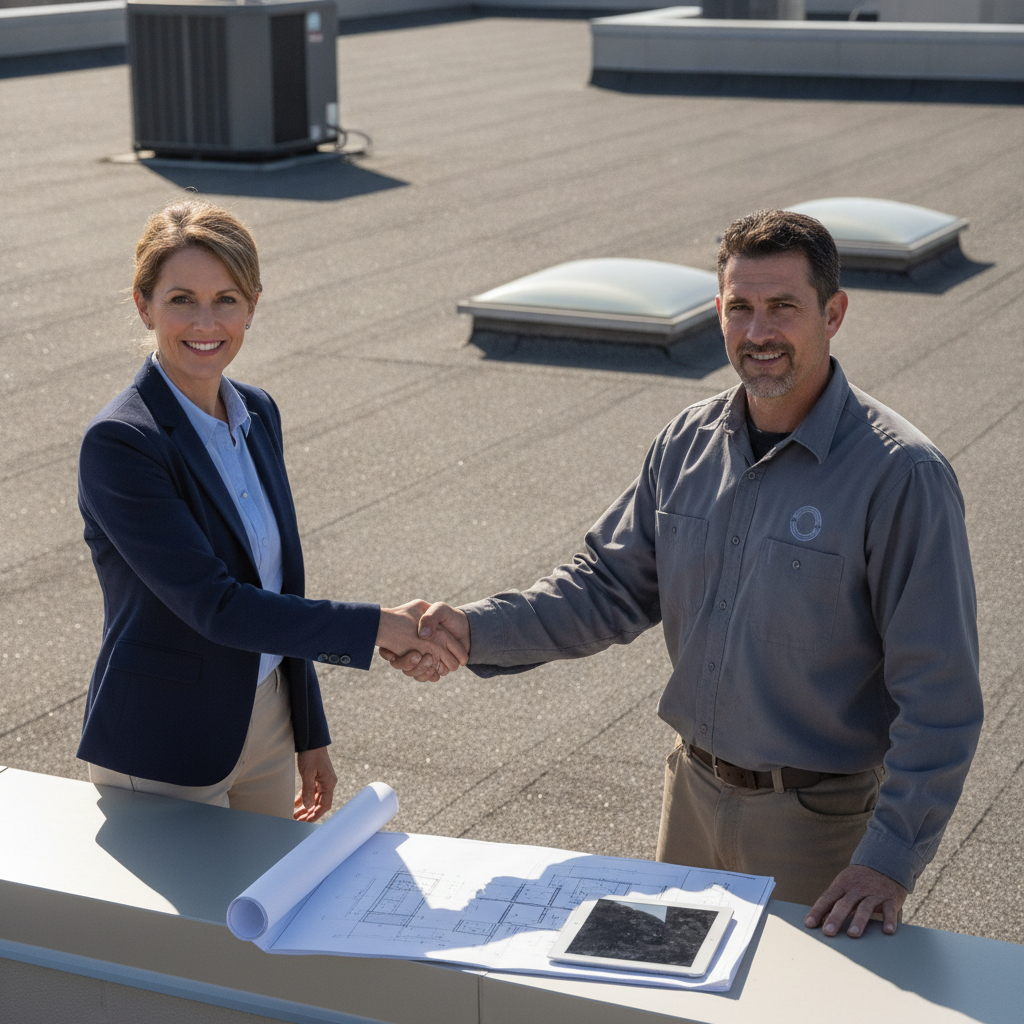
The honest answer is that repair-versus-replace isn’t always visible from the ground, or even from a quick walk of the roof. It depends on core samples, moisture scans, and a real understanding of what’s happening underneath the membrane — not just what’s visible on top of it. We self-perform every inspection with our own crews, which means the person assessing your roof is the same person who understands what a repair versus a full system replacement actually involves, not a subcontractor working off someone else’s notes.
If you’re staring down a roof that’s showing its age, the fastest way to get clarity is a straightforward inspection — not a guess based on how old the roof looks from the parking lot.